
Health Library
Dangers of Symbicort: Side Effects and Risks You Should Know
February 21, 2026
Question on this topic? Get an instant answer from August.
Symbicort is generally safe when used as prescribed, but it does carry real risks that you should understand before starting it. The most serious concern involves LABA component (formoterol), which has been linked to an increased risk of asthma related death when used without an inhaled corticosteroid. In Symbicort, corticosteroid budesonide is already included, which helps offset that risk, but FDA still requires a boxed warning on label.
What Is Symbicort and How Does It Work?
Symbicort is a combination inhaler that contains two medications: budesonide, an inhaled corticosteroid that reduces inflammation in your airways, and formoterol, a long acting beta2 agonist (LABA) that relaxes muscles around your airways to keep them open.
It is prescribed for asthma in patients aged 6 and older and for maintenance treatment of COPD (chronic obstructive pulmonary disease) in adults. According to FDA approved prescribing information on DailyMed, Symbicort not meant to relieve sudden breathing problems. It a maintenance medication, not a rescue inhaler.
What Are Most Common Side Effects?
Most people who take Symbicort tolerate it well, but some side effects are fairly common. In clinical trials, most frequently reported ones (occurring in more than 3% of users) include nasopharyngitis (common cold symptoms), headache, upper respiratory tract infections, throat pain or irritation, sinusitis, nasal congestion, stomach discomfort, and vomiting.
These side effects are usually mild and tend to improve as your body adjusts to medication. If throat irritation becomes persistent or bothersome, it may help to explore what causes one sided throat pain when swallowing to rule out other causes.
Can Symbicort Cause Oral Thrush?
Yes. One of well known risks of any inhaled corticosteroid is oral candidiasis, commonly called oral thrush. This a fungal infection caused by Candida albicans that develops in mouth and throat. It appears as white patches on tongue, inner cheeks, or back of throat and can cause soreness or a cottony feeling in mouth.
The budesonide in Symbicort can suppress local immune defenses in your mouth and throat, creating an environment where fungus can overgrow. This risk increases with higher doses and longer use.
To reduce your chance of developing thrush, rinse your mouth with water after every use of Symbicort. Spit water out instead of swallowing. If thrush does develop, your doctor can prescribe an antifungal treatment. This guide on clotrimazole lozenges for oral thrush explains one of most commonly used options.
What Are Serious Dangers?
Beyond common side effects, Symbicort carries several serious risks that FDA highlights in its prescribing information.
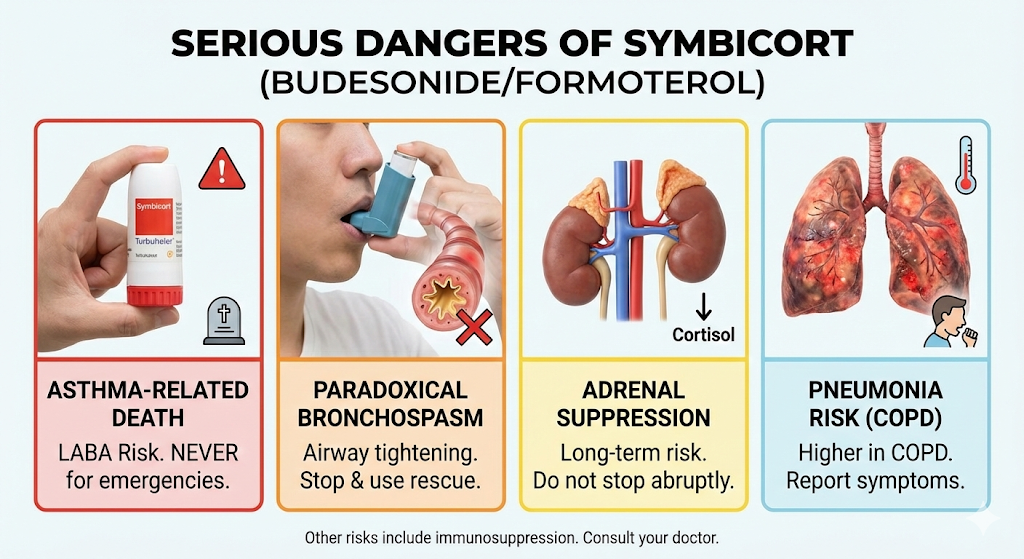
Asthma related death. This is most critical warning. LABA medications like formoterol, when used alone without an inhaled corticosteroid, have been associated with an increased risk of asthma related death. In Symbicort, corticosteroid budesonide built in, which reduces this risk. But FDA still requires this warning because of class wide concern. Large clinical trials have since shown that when a LABA and an inhaled corticosteroid are used together (as in Symbicort), risk of serious asthma related events not significantly increased compared to using a corticosteroid alone. However, you should never use Symbicort for sudden breathing emergencies.
Paradoxical bronchospasm. In rare cases, Symbicort can cause your airways to tighten immediately after use instead of relaxing them. This can be life threatening. If you experience sudden worsening of wheezing or breathing difficulty right after using Symbicort, stop using it immediately, use your rescue inhaler, and seek medical help.
Adrenal suppression. Budesonide, corticosteroid in Symbicort, can suppress your body's natural cortisol production over time, particularly at higher doses. This known as HPA (hypothalamic pituitary adrenal) axis suppression. If you have been using Symbicort for a long time and your body's adrenal function has been suppressed, you may not be able to produce enough cortisol during periods of severe stress, surgery, illness, or injury. This can lead to adrenal crisis, which a medical emergency. Never stop Symbicort abruptly without your doctor's guidance.
Increased risk of pneumonia. This risk more relevant for people using Symbicort for COPD. Inhaled corticosteroids have been associated with a higher rate of pneumonia in COPD patients. If you develop a new or worsening cough, increased mucus production, fever, or chest pain, tell your doctor promptly.
Immunosuppression. Because budesonide suppresses local and to some extent systemic immune responses, people using Symbicort may be more susceptible to infections. This includes fungal, bacterial, viral, and parasitic infections. If you have active tuberculosis, an untreated fungal infection, or a weakened immune system, Symbicort may not be safe for you. You should also make sure you are up to date on vaccinations, including for chickenpox and measles, before starting treatment.
Does Symbicort Affect Heart?
Formoterol, LABA component in Symbicort, can stimulate cardiovascular system. Some people experience an increased heart rate, palpitations, chest pain, elevated blood pressure, or tremors.
These effects are more likely at higher doses or if you accidentally use more than prescribed. People with existing heart conditions, high blood pressure, seizure disorders, or thyroid problems should use Symbicort with extra caution and under close medical supervision.
You should also be careful about drug interactions. Taking Symbicort alongside MAO inhibitors, tricyclic antidepressants, or other beta agonists can amplify cardiovascular effects. Strong CYP3A4 inhibitors like ketoconazole and ritonavir can increase systemic exposure to budesonide, which may intensify corticosteroid related side effects.
Can Symbicort Affect Bone Density and Growth?
Long term use of inhaled corticosteroids like budesonide can reduce bone mineral density over time. This a concern for people who already have risk factors for osteoporosis, such as older adults, postmenopausal women, smokers, or people with a family history of bone loss. Your doctor may monitor your bone density if you are on Symbicort long term.
In children, Symbicort may slow growth rate. Clinical studies have shown that inhaled corticosteroids can reduce growth velocity in pediatric patients. Your child's doctor should regularly monitor their height while they are on this medication and use lowest effective dose.
Can Symbicort Cause Eye Problems?
Yes. Long term use of inhaled corticosteroids has been linked to an increased risk of glaucoma (elevated eye pressure) and cataracts (clouding of eye lens). If you already have glaucoma or cataracts, let your doctor know before starting Symbicort. Regular eye exams are recommended for people on long term inhaled corticosteroid therapy.
When Should You Call Your Doctor?
Reach out to your healthcare provider if you experience any of these:
- Breathing that gets worse over time or does not improve with treatment
- Needing your rescue inhaler more often than usual
- White patches in your mouth or throat
- Sudden worsening of wheezing right after using inhaler
- Fast or irregular heartbeat, chest pain, or tremors
- Signs of infection like fever, chills, or increased mucus
- Vision changes or eye pain
- Signs of adrenal insufficiency like extreme fatigue, weakness, nausea, or dizziness
Bottom Line
Symbicort is an effective medication for managing asthma and COPD, but like any powerful drug, it comes with real risks. The most important ones include LABA related boxed warning, oral thrush, adrenal suppression, increased pneumonia risk in COPD patients, and cardiovascular effects. Most of these risks can be managed with proper use, regular monitoring, and open communication with your doctor. Always rinse your mouth after each use, never exceed prescribed dose, and do not stop medication suddenly without medical guidance.
Health Companion
trusted by
6Mpeople
Get clear medical guidance
on symptoms, medications, and lab reports.