
Health Library
Does Tirzepatide Cause Hair Loss? What You Should Know
February 21, 2026
Question on this topic? Get an instant answer from August.
Yes, some people taking tirzepatide do experience hair thinning. In clinical trials for Zepbound, hair loss was reported by about 4 to 5% of participants, compared to 1% in the placebo group. That a real difference. But important thing to understand is that hair loss is most likely tied to rapid weight loss itself, not a direct toxic effect of medication on your hair follicles.
Why Does Hair Fall Out During Weight Loss?
type of hair loss most people experience on tirzepatide is called telogen effluvium. This happens when a significant physical stress pushes a large number of hair follicles from their active growing phase into a resting phase all at once.
Normally, about 85 to 90% of your hair is actively growing at any given time. Only about 10 to 15% in resting (telogen) phase. But when your body goes through something physically stressful, like losing a substantial amount of weight quickly, up to 70% of growing hairs can shift into that resting phase prematurely. A few months later, those resting hairs fall out together, and you notice diffuse thinning across your scalp.
According to a detailed clinical review on telogen effluvium from NCBI Bookshelf, this shedding typically begins two to four months after triggering event. That timing lines up with what many tirzepatide users report. They start noticing increased shedding a few months into treatment, right around time significant weight loss kicks in.
The reassuring part is that telogen effluvium temporary. Once body adjusts and weight stabilizes, shedding usually slows down and new hair begins to grow back within three to six months.
Is It Medication or Weight Loss?
This is a key distinction. Tirzepatide does not appear to damage hair follicles directly. The medication works by reducing appetite and slowing gastric emptying, which leads to eating significantly less. The rapid weight loss that follows what stresses body.
This pattern is not unique to tirzepatide. Studies on bariatric surgery patients show that roughly 57% experience hair loss after procedure. Similar reports exist with semaglutide and liraglutide. Any situation where body loses a large amount of weight in a short period can trigger telogen effluvium.
The clinical trial data supports this too. In Zepbound trials, highest rates of hair loss were seen in participants who lost most weight. Hair loss was also reported more frequently in women (about 7.1%) than in men (0.5%), which may relate to hormonal shifts that happen alongside rapid weight change in women.
What Nutritional Gaps Make It Worse?
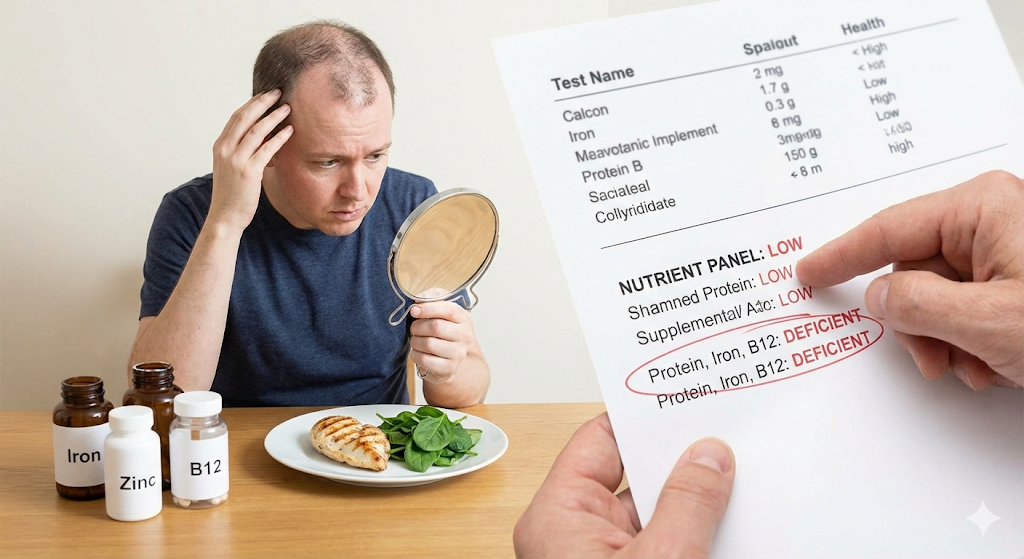
When you eat significantly less food, you take in fewer nutrients. Several specific nutritional shortfalls can make hair shedding worse or slow down regrowth. These include:
- Protein: Hair is made almost entirely of a protein called keratin. When protein intake drops below what your body needs, hair growth is one of first things to suffer. Most guidelines recommend at least 60 to 80 grams of protein daily during active weight loss.
- Iron: Low iron is one of most well-documented nutritional causes of telogen effluvium. Your body prioritizes iron for blood production over hair growth, so hair follicles lose out early when stores drop.
- Zinc: Plays a direct role in hair follicle function and cell division. Deficiency can worsen shedding.
- Vitamin B12: Reduced food intake, especially of animal products, can lead to B12 shortfalls that contribute to fatigue and hair thinning. If you are curious about how B12 levels connect to tirzepatide, this article on recovering from B12 deficiency covers it in more detail.
- Vitamin D: Plays a role in hair growth cycle. Many people are already deficient before starting treatment, and reduced food intake can make it worse.
These gaps are fixable. A simple blood panel can identify which nutrients are low, and targeted supplementation or dietary adjustments can help.
Can You Prevent Hair Loss on Tirzepatide?
You may not be able to prevent it entirely, but you can reduce its severity and support faster regrowth. Here are some practical steps that can help.
First, prioritize protein at every meal. This single most important dietary factor for hair health during weight loss. Lean meats, eggs, Greek yogurt, fish, legumes, and tofu are all good options.
Second, ask your doctor to check your iron, ferritin, zinc, vitamin D, and B12 levels before or early in treatment. Catching deficiencies early means you can correct them before they contribute to shedding. If your doctor finds low potassium or other electrolyte imbalances from GI side effects, addressing those matters too. This guide on low potassium symptoms can help you recognize signs.
Third, consider slowing your rate of weight loss if shedding becomes noticeable. Your doctor may suggest staying at a lower dose for longer before increasing, which can reduce metabolic shock that triggers telogen effluvium.
Fourth, manage stress. Emotional stress compounds physical stress your body already under. Sleep, gentle exercise, and stress reduction all support healthier hair cycles.
Fifth, be patient. This is probably hardest one. Telogen effluvium takes time to resolve. But most people see significant improvement within six to nine months once weight stabilizes and nutrition improves.
When Should You Talk to Your Doctor?
While telogen effluvium from weight loss is most likely explanation for hair thinning on tirzepatide, it not only possibility. You should check in with your doctor if:
- Shedding continues for more than six months without improvement
- You notice patchy hair loss rather than diffuse thinning
- Your scalp shows redness, scaling, or itching
- You have other symptoms like unusual fatigue, feeling cold, or unexplained weight changes
These could point to other conditions like thyroid dysfunction, iron deficiency anemia, or alopecia areata, which need their own evaluation and treatment.
Bigger Picture
Hair loss on tirzepatide is real, but it is almost always temporary. It driven by weight loss process itself, not by medication damaging your hair. Eating enough protein, correcting nutrient deficiencies, and allowing your body time to adjust are most effective steps you can take. Your hair went through a stressful transition, and with right support, it will recover.
Health Companion
trusted by
6Mpeople
Get clear medical guidance
on symptoms, medications, and lab reports.