
Health Library
Does Tirzepatide Make You Tired?
February 16, 2026
Question on this topic? Get an instant answer from August.
Yes, tirzepatide can make you feel tired. Fatigue is a recognized side effect, though not one of most common ones. In clinical trials for Zepbound (weight loss brand of tirzepatide), around 5 to 7 percent of people reported fatigue depending on dose.
The reassuring part is that for most people, this tiredness is temporary. It tends to show up early in treatment or during dose increases, and it usually settles within two to four weeks.
Why Does Tirzepatide Cause Fatigue?
Tirzepatide does not directly drain your energy way a sedating medication might. The tiredness usually comes from indirect changes medication triggers in your body.
The most common reason is eating fewer calories. Tirzepatide mimics two gut hormones called GLP-1 and GIP that reduce your appetite significantly. Many people start eating noticeably less within first several weeks. Less food means less fuel, and that can leave you feeling low on energy.
Another reason dehydration. Tirzepatide's most common side effects are nausea, vomiting, and diarrhea, all of which cause fluid loss. Even mild dehydration makes fatigue one of first things you feel. Many people also forget to drink enough water because appetite suppression makes them less aware of thirst.
Can Blood Sugar Changes Play a Role?
They absolutely can. Tirzepatide helps regulate blood sugar, which is usually beneficial. But sometimes blood sugar can dip lower than your body is used to, especially during the adjustment period.
When blood sugar drops too low (a condition called hypoglycemia), your body responds with fatigue, shakiness, and dizziness. This risk higher if you take tirzepatide alongside insulin or other diabetes medications. Even without those, skipping meals while on tirzepatide can cause mild dips that leave you feeling wiped out.
If your tiredness comes in waves, especially before meals or after long gaps between eating, blood sugar fluctuations might be the cause.
Does the Dose Matter?
It does. Clinical trial data shows a dose dependent pattern. About 5 percent of people on the 5mg dose reported tiredness, 6 percent on 10mg, and 7 percent on the 15mg dose. That compared with only 3 percent on placebo.
Tirzepatide starts at a low dose and gradually increases over several months. Each dose increase gives your body time to adjust. Fatigue is most likely during these escalation periods. Once you settle into a stable dose, the tiredness usually fades.
If fatigue gets significantly worse after a dose increase, mention it to your doctor. They may slow the escalation or hold your dose steady longer.
Could It Be Electrolyte Imbalance?
Yes, and this one is easy to overlook. Electrolytes are minerals like sodium, potassium, magnesium, and calcium that your body needs to produce energy and keep muscles working properly.
When you eat less, you take in fewer electrolytes through food. If you are also dealing with vomiting or diarrhea, you lose even more. On top of that, drinking a lot of water without replacing electrolytes can dilute ones already in your system.
The result is a tired, sluggish feeling that does not improve just by resting. If you are staying well hydrated but still feel drained, an electrolyte imbalance might be missing piece.
Can Tirzepatide Disrupt Your Sleep?
It can, though indirectly. Some people find that nausea or stomach discomfort is worse at night, which disrupts sleep. Poor sleep then carries over into daytime fatigue.
Changes in eating patterns can also affect sleep. Eating much less or at different times can shift your body's internal rhythms, and your body may need time to recalibrate.
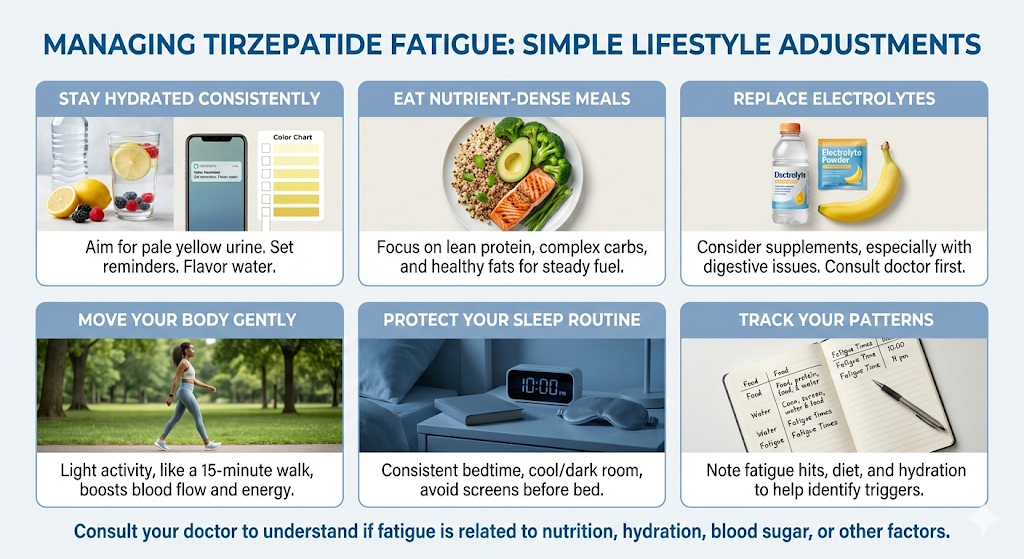
What Can You Do to Feel Less Tired?
The good news is that tirzepatide fatigue responds well to simple lifestyle adjustments. Here are strategies that tend to help most.
- Stay hydrated consistently. Aim to drink enough water that your urine stays a pale yellow color. Set reminders if you tend to forget. Add flavor with berries or cucumber if plain water feels unappealing.
- Eat nutrient-dense meals even if portions are smaller. Focus on lean protein, complex carbohydrates, and healthy fats. These foods give your body steady fuel even when you are eating less overall.
- Replace electrolytes. Consider an electrolyte supplement or drink, especially if you are experiencing digestive side effects. Check with your doctor first if you take other medications.
- Move your body gently. Even 15 minutes of walking can boost blood flow and energy levels. Exercise might feel counterintuitive when you are tired, but light activity often helps more than resting.
- Protect your sleep routine. Go to bed at same time each night. Keep your room cool and dark. Avoid screens before bed.
- Track your patterns. Note when fatigue hits, what you ate, and how much water you drank. This information helps your doctor identify whether tiredness is related to nutrition, hydration, blood sugar, or something else.
When Should You Talk to Your Doctor?
Mild tiredness during first few weeks of treatment or after a dose increase is expected. It usually resolves on its own.
But reach out to your doctor if fatigue lasts longer than a month, gets worse instead of better, or interferes with your daily life. Also contact your doctor if tiredness comes with symptoms like severe dizziness, confusion, rapid heartbeat, or dark urine. These could signal hypoglycemia or significant dehydration, both of which need medical attention.
Conclusion
Tirzepatide fatigue is real but manageable. Its usually not medication itself making you tired. Its chain of changes your body goes through as it adjusts to eating less, processing sugar differently, and losing weight.
Most people find that with proper hydration, balanced nutrition, and patience, their energy levels stabilize or even improve. Some clinical data shows that a majority of people on tirzepatide report increased energy over time as weight decreases and blood sugar becomes more stable. Give your body support it needs, and tiredness will very likely pass.
Health Companion
trusted by
6Mpeople
Get clear medical guidance
on symptoms, medications, and lab reports.