
Health Library
Mounjaro and Thyroid Cancer: What Evidence Shows
February 23, 2026
Question on this topic? Get an instant answer from August.
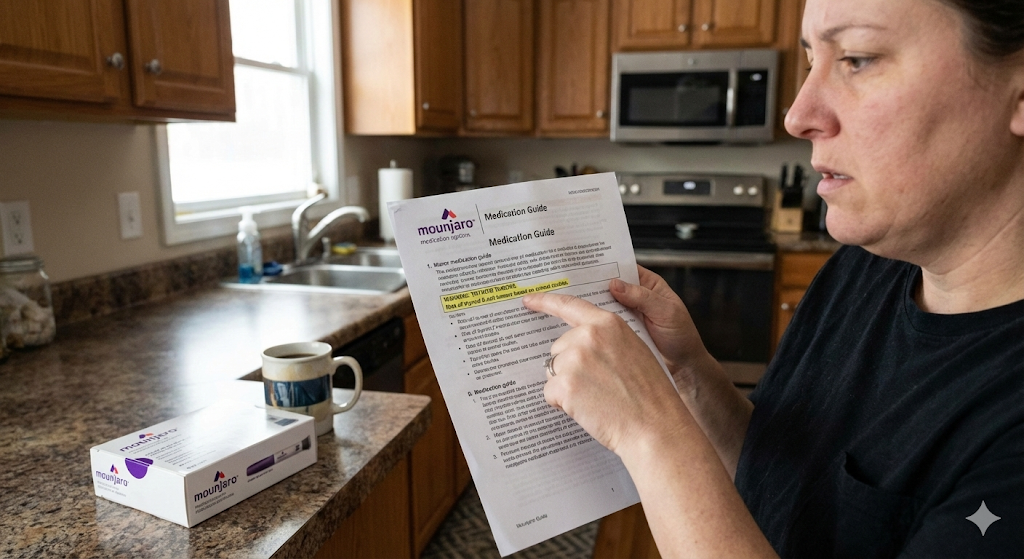
No confirmed case of thyroid cancer in humans has been directly caused by Mounjaro. That said, concern is understandable. Mounjaro carries a boxed warning about thyroid tumors, which is most serious type of safety alert FDA can place on medication. If you have seen that warning and felt alarmed, let's walk through exactly what it means.
Why Does Mounjaro Have Thyroid Cancer Warning?
The warning comes from animal studies, not human data. In two year study on rats, tirzepatide (active ingredient in Mounjaro) caused thyroid C-cell tumors in dose dependent manner. C-cells are specific types of cells in the thyroid gland. When these cells grow out of control, they can form a rare cancer called medullary thyroid carcinoma (MTC).
According to FDA-approved prescribing information for Mounjaro, tirzepatide caused statistically significant increase in thyroid C-cell adenomas and carcinomas in both male and female rats at all doses tested. However, label also clearly states that it is unknown whether Mounjaro causes these tumors in humans. The human relevance of rat findings has not been determined: Mounjaro FDA Prescribing Information
This is an important distinction. The FDA placed boxed warning as precaution based on animal data. It does not mean that Mounjaro has been proven to cause thyroid cancer in people.
Why Do Rat Results Not Automatically Apply to Humans?
Rat thyroid biology is different from human thyroid biology. This matters lot when interpreting cancer risk.
GLP-1 receptors (which Mounjaro activates) are heavily expressed on surface of thyroid C-cells in rats. When GLP-1 receptor agonists stimulate these receptors over long periods, rat C-cells can proliferate and eventually form tumors. In humans, GLP-1 receptors are expressed in a much smaller percentage of thyroid C-cells. Research published through National Institutes of Health has found that GLP-1 receptors are present in no more than about 30% of human thyroid cells and C-cells. This much lower receptor density one of main reasons scientists believe rat findings may not translate to humans.
There is another important difference. In rats, GLP-1 receptor activation directly triggers calcitonin release through specific cellular pathway. Calcitonin is a hormone produced by C-cells, and elevated calcitonin is marker of C-cell activity and potential tumor growth. In humans, calcitonin secretion does not respond to GLP-1 stimulation same way. Multiple studies have shown that GLP-1 receptor agonists do not raise calcitonin levels in humans, even with extended use.
What Does Human Research Show?
This is where picture gets more reassuring. Several large-scale studies have examined whether GLP-1 receptor agonists (drug class that includes Mounjaro, Ozempic, and Wegovy) are linked to thyroid cancer in humans. The results have been mixed, but largest and most rigorous studies have been largely reassuring.
A major 2024 Scandinavian cohort study followed over 145,000 patients who used GLP-1 receptor agonists and compared them to patients on different class of diabetes medication. Over mean follow-up of nearly four years, there was no association between GLP-1 receptor agonist use and increased thyroid cancer risk. The rate of thyroid cancer was actually similar between both groups.
A 2025 international multisite cohort study that pooled data from six countries (including Canada, Denmark, Norway, Sweden, South Korea, and Taiwan) found same thing. Across nearly 100,000 GLP-1 receptor agonist users, there was no increased risk of thyroid cancer compared to control group.
One French study from 2023 did find a modest association between GLP-1 receptor agonist use and thyroid cancer after one to three years. But this study used different comparison group and methodology, and subsequent larger studies have not replicated finding.
A 2024 meta-analysis of randomized controlled trials found a small increase in relative risk for overall thyroid cancer among GLP-1 receptor agonist users. But absolute risk was very low. Researchers calculated that for every 1,349 people treated for five years, one additional thyroid cancer case might occur. When they looked specifically at medullary thyroid cancer (type linked to rat studies), there was no statistically significant increase.
So bottom line from human research: absolute risk appears to be very low, and multiple large studies have found no clear causal link between GLP-1 receptor agonists and thyroid cancer in humans.

Who Should Not Take Mounjaro Because of This Risk?
Even though human evidence is largely reassuring, FDA has drawn a clear line for certain people. Mounjaro is contraindicated (meaning it should not be used) in anyone who has personal or family history of medullary thyroid carcinoma, or in anyone with condition called Multiple Endocrine Neoplasia syndrome type 2 (MEN 2).
MEN 2 is a rare inherited condition that significantly raises risk of medullary thyroid cancer. If you or close family member has been diagnosed with MTC or MEN 2, Mounjaro and other GLP-1 receptor agonists are not appropriate for you.
For everyone else, current evidence does not support avoiding Mounjaro based on thyroid cancer concerns alone. But you should still tell your doctor about any family history of thyroid problems before starting medication.
If you are considering switching between GLP-1 medications or want to understand how Mounjaro compares to other options in this drug class, this guide covers differences in dosing and safety: Semaglutide to Tirzepatide Conversion
What Symptoms Should You Watch For?
While you are taking Mounjaro, it is worth knowing symptoms that could signal thyroid problem. These are same symptoms FDA recommends discussing with your doctor.
- A lump or swelling in front of your neck
- Persistent hoarseness or voice changes that do not go away
- Difficulty swallowing (dysphagia)
- Shortness of breath or difficulty breathing
These symptoms are not specific to thyroid cancer. They can be caused by many other conditions. But if you notice any of them while taking Mounjaro, bring them up with your healthcare provider.
It is also worth noting that Mounjaro can cause other side effects that are much more common than any thyroid concern. Gastrointestinal symptoms like nausea, diarrhea, and body aches are reported far more frequently. If you are experiencing side effects from Mounjaro and want to understand what typical and what not, this provides practical overview: Can Mounjaro Cause Body Aches?
Bottom Line
There are no confirmed cases of Mounjaro directly causing thyroid cancer in humans. The boxed warning is based on rat studies where thyroid C-cell tumors developed at clinically relevant doses. But human thyroid cells express far fewer GLP-1 receptors than rat thyroid cells, and most large-scale human studies have not found a significant link between GLP-1 receptor agonists and thyroid cancer. People with personal or family history of medullary thyroid cancer or MEN 2 should avoid Mounjaro entirely. For everyone else, current evidence suggests that benefits of medication likely outweigh this specific theoretical risk. If you have concerns, talk to your doctor about your individual risk factors before starting or continuing treatment.
Health Companion
trusted by
6Mpeople
Get clear medical guidance
on symptoms, medications, and lab reports.