
Health Library
What Herpes Looks Like at Different Stage
February 26, 2026
Question on this topic? Get an instant answer from August.
TL;DR:
• Herpes outbreaks move through five stages: tingling, blisters, ulcers, crusting, and healing.
• The first outbreak is usually worst and can last two to four weeks.
• Later outbreaks tend to be milder, shorter, and easier to manage with antiviral treatment.
Herpes sores change in appearance as they move through each stage. Knowing what to expect can help you feel less anxious and more in control.
Herpes is caused by two types of herpes simplex virus. HSV-1 usually shows up around mouth as cold sores. HSV-2 mostly affects genital area. But both types can appear in either location. The sores from both look very similar, so only a test can confirm which type you have.
What Does Stage 1 of Herpes Look Like?
The first stage is called prodrome. You may not see anything on your skin yet. Instead, you feel it. There is a tingling, itching, or burning sensation in area where sore is about to appear. Some people also describe a slight numbness.
This stage usually lasts a few hours to about two days. During a first ever outbreak, you might also have flu like symptoms like a low fever, body aches, and swollen glands.
Even though there are no visible sores yet, you are still contagious. The virus is already active on skin surface. This is best time to start antiviral medication if you have it on hand. Starting treatment early can reduce how severe outbreak becomes.
What Do Herpes Blisters Look Like?
Stage two is when visible signs begin. Small red bumps appear on skin. Within a day or two, these bumps fill with clear or slightly yellowish fluid and become blisters.
The blisters usually form in a cluster. They can show up on lips, around mouth, on genitals, on buttocks, or on inner thighs. In some cases, blisters form on cervix or inside vaginal area where they are not easily visible.
These blisters are often small, sometimes just a few millimeters across. They are tender and can feel quite painful, especially in sensitive areas. The skin around them may look red and swollen.
This is a good point to mention that herpes blisters can sometimes be confused with other skin issues. Razor bumps, ingrown hairs, and folliculitis can all look similar at first glance. If you are unsure whether what you are seeing is herpes or something else, it helps to understand key differences between razor bumps and herpes before jumping to conclusions.
What Happens When Herpes Blisters Burst?
Stage three is ulcer stage. This is usually most uncomfortable part. The blisters break open and release fluid inside. What is left behind are shallow, open sores.
These sores are often described as wet, raw looking patches. They can be quite painful, especially when they come into contact with clothing, urine, or water. Many people rate this stage around a seven out of ten in terms of discomfort.
This is also most contagious stage. The fluid from blisters carries a high concentration of virus. Avoid touching sores and wash your hands thoroughly if you do.
The ulcer stage typically lasts one to three days. In moist areas like inside mouth or vaginal area, sores may take longer to dry out.
What Does Crusting Stage Look Like?
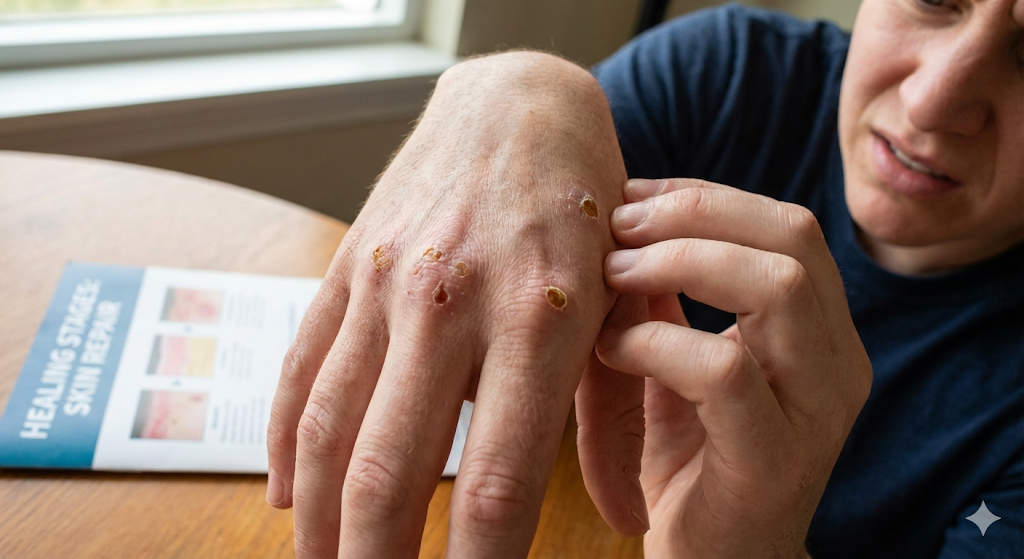
Stage four is when healing starts to become visible. The open sores begin to dry out and form a yellowish or brownish crust. This scab is a sign that your body is actively repairing skin underneath.
The crusted sores may feel itchy and tight. It is tempting to pick at scab, but try not to. Pulling it off can damage new skin forming underneath and may cause scarring.
Sores in moist areas like inside mouth or on genitals may not form a visible crust. They tend to heal directly from ulcer stage without a scab. So if your sores are in those areas and you do not see crusting, that is normal.
How Long Does It Take for Herpes Sores to Fully Heal?
Stage five is final healing stage. The scab falls off and skin underneath is usually pink or slightly discolored for a short while. In most cases, herpes sores heal without leaving a permanent scar.
For a first outbreak, entire process from tingling to fully healed skin can take two to four weeks. Recurrent outbreaks are usually shorter. Many people find that later outbreaks heal within seven to ten days, sometimes even faster with antiviral medication.
According to data from national health surveys, herpes is far more common than most people realize. Nearly 48 percent of people aged 14 to 49 in United States carry HSV-1, and about 12 percent carry HSV-2. Many of them never have noticeable symptoms. So if you are dealing with an outbreak, you are far from alone in this.
Do Recurrent Outbreaks Look Same as First One?
Usually, recurrent outbreaks are milder. The blisters tend to be smaller, fewer in number, and less painful. The whole-body symptoms like fever and body aches are rare in repeat episodes.
Recurrent sores tend to show up in same general area as initial outbreak. That is because virus lives in nerve clusters near spine and travels along same pathways each time it reactivates. Common triggers include stress, illness, lack of sleep, hormonal changes, and sun exposure. Over time, outbreaks usually happen less often.
What Else Can Look Like Herpes?
Several skin conditions can mimic herpes sores, which is why visual identification alone is not always reliable.
Here are some conditions that are commonly mistaken for herpes:
• Ingrown hairs, especially after shaving
• Folliculitis, an infection of hair follicles
• Contact dermatitis from soaps or latex
• Canker sores inside mouth, which are not caused by herpes
If you have bumps that look suspicious, learning difference between folliculitis and herpes can help you figure out your next step.
The only way to know for certain is to get tested. A healthcare provider can swab an active sore or run a blood test to check for herpes antibodies.
How Can You Manage a Herpes Outbreak?
Antiviral medications like acyclovir, valacyclovir, and famciclovir work best when started early. Your doctor might prescribe them for seven to ten days during a first outbreak or for a shorter course during recurrences.
Beyond medication, simple measures can make a real difference:
• Keep area clean and dry
• Wear loose, breathable clothing
• Avoid touching sores directly
• Apply petroleum jelly gently to reduce pain during urination if sores are in genital area
These steps will not cure virus, but they can make experience much more manageable.
Conclusion
Herpes outbreaks follow a predictable pattern. They start with tingling, move through blisters and open sores, then crust over and heal. The first outbreak is typically most intense, and each one after that tends to be easier. Knowing what each stage looks like can help you catch an outbreak early, start treatment sooner, and take steps to protect both yourself and others.
If something on your skin does not look right, get it checked. A simple test can give you a clear answer and peace of mind.
Health Companion
trusted by
6Mpeople
Get clear medical guidance
on symptoms, medications, and lab reports.