
Health Library
How to Heal a Broken Blood Vessel in Your Eye Fast
February 16, 2026
Question on this topic? Get an instant answer from August.
A broken blood vessel in your eye, called a subconjunctival hemorrhage, heals on its own within one to three weeks. There is no way to instantly remove the blood or make it disappear overnight. But there are things you can do to support healing, keep your eye comfortable, and avoid making it worse.
That bright red patch looks alarming. But in most cases, it is completely harmless and painless. Your body will reabsorb the trapped blood naturally.
What Actually Happened in Your Eye?
A tiny blood vessel just beneath the conjunctiva (the thin, clear membrane covering white of your eye) burst and leaked a small amount of blood. Because conjunctiva cannot absorb blood quickly, it gets trapped between the membrane and white sclera underneath. That is what creates vivid red or dark patch.
This can happen from something as simple as a hard sneeze, a cough, rubbing your eye, straining during exercise, or even sleeping in an awkward position. Sometimes it happens for no clear reason at all.
The blood stays bright red because the thin conjunctiva allows oxygen to reach it, which keeps it from darkening way a bruise on your skin would. As it heals, color may shift from red to brown, purple, or yellow before fading completely.
What Can You Do in First 24 Hours?
The first day is when you can have most impact on comfort.
Apply a cold compress gently. Wrap ice or a cold pack in a clean cloth and hold it over your closed eyelid for 10 to 15 minutes. Repeat this a few times during first day. The cold helps reduce any mild swelling and may limit further bleeding from broken vessel.
Use preservative-free lubricating eye drops. Artificial tears can soothe any scratchy or irritated feeling. They keep the surface of your eye moist, which supports comfort during healing. Apply them several times a day as needed.
Avoid rubbing your eye. This is important. Rubbing can aggravate broken vessel, disturb healing tissue, or even cause additional vessels to break. If your eye feels itchy or dry, use eye drops instead.
What Helps After First Day?
Once you are past initial 24 hours, the approach shifts slightly.
Try warm compresses. After the first day, a warm compress may help improve blood circulation around the eye. Some eye care professionals believe better blood flow can assist your body in reabsorbing the trapped blood, though there is no strong clinical evidence that it speeds things up significantly. Use a clean, warm cloth over your closed eyelid for about 10 minutes, twice a day.
Rest your eyes. Reduce screen time and avoid activities that strain your eyes. Giving your eyes regular breaks helps minimize irritation that could slow healing.
Stay hydrated. Drinking enough water supports your overall circulation, which plays a role in how quickly your body clears blood from under conjunctiva.
Eat foods that support blood vessel health. Vitamin C helps strengthen capillary walls. Foods like oranges, strawberries, bell peppers, and leafy greens are good sources. Vitamin K supports healthy blood clotting, and you can find it in spinach, kale, and broccoli. These are not miracle fixes, but they give your body nutritional support it needs.
What Should You Avoid?
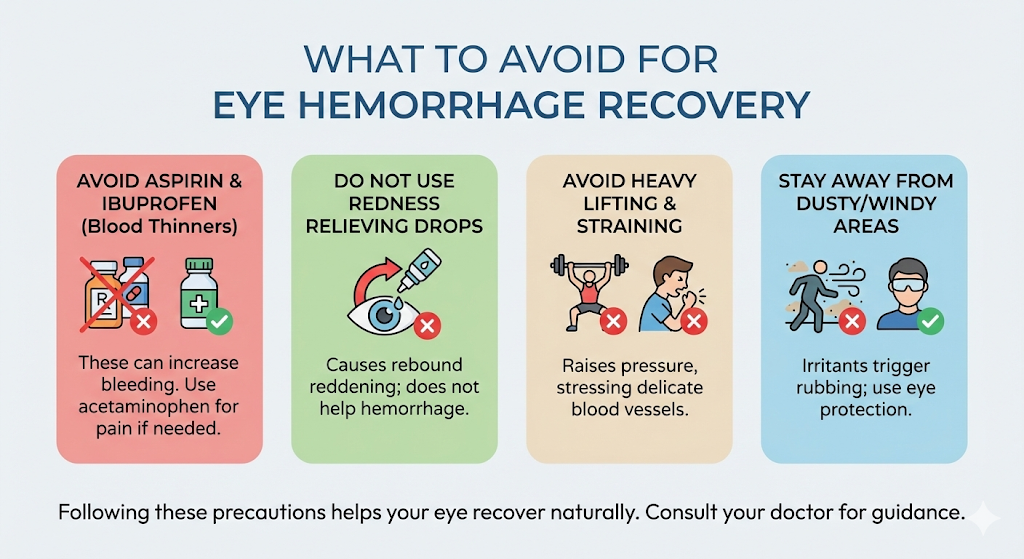
There are a few things that can slow down healing or make the situation worse. Staying away from these helps your eye recover as fast as it naturally can.
- Avoid aspirin and ibuprofen unless you need them for another medical reason. These are blood thinners that can increase bleeding. Use acetaminophen instead if you need pain relief for something unrelated.
- Do not use "redness relieving" eye drops. These drops contain vasoconstrictors that shrink blood vessels temporarily. They do not help a subconjunctival hemorrhage and can actually cause a rebound reddening effect that makes things worse.
- Avoid heavy lifting and intense straining. Activities that raise pressure in your head and face (like heavy weightlifting, straining during bowel movements, or forceful coughing) can put stress on delicate blood vessels in your eye.
- Stay away from dusty or windy environments without eye protection. Irritants can trigger rubbing or further inflammation.
How Long Does It Take to Fully Heal?
Most small broken blood vessels heal within 7 to 14 days. Larger hemorrhages that cover more of white of your eye can take up to three weeks to clear completely.
As blood gets reabsorbed, the red patch will change colors, much like a fading bruise on your skin. It may go from bright red to brownish, then yellowish, before disappearing entirely. This color change is normal and a sign that healing is progressing.
According to American Academy of Ophthalmology, there is nothing you can do to dramatically speed up this absorption. The timeline is largely determined by size of hemorrhage and your body's natural healing pace. The steps above support that process, but they will not cut a two-week timeline down to two days.
When Should You See a Doctor?
A single broken blood vessel that causes no pain and no vision changes usually needs no medical attention. But certain situations do call for a visit.
See your doctor or eye care provider if:
- The redness is accompanied by eye pain
- You notice changes in your vision
- Blood appears over colored part of your eye (the iris) or in front of pupil
- The hemorrhage happened after a direct injury or trauma to eye
- You experience broken blood vessels in your eye frequently
- You have pus or thick discharge coming from eye
- The redness has not improved after three weeks
Recurring subconjunctival hemorrhages can sometimes point to underlying conditions like high blood pressure, a blood clotting disorder, or issues related to blood-thinning medications. Your doctor may check your blood pressure and order blood tests to rule these out.
Give Your Eye Time
A broken blood vessel in your eye is one of those conditions that looks far worse than it is. It does not affect your vision. It does not typically cause pain. And it will resolve on its own.
Cold compresses early on, warm compresses after first day, lubricating drops for comfort, and avoiding things that increase bleeding pressure are best things you can do. Beyond that, patience is most effective treatment. Your body knows how to handle this, and that red patch will fade on its own.
Health Companion
trusted by
6Mpeople
Get clear medical guidance
on symptoms, medications, and lab reports.