
Health Library
5 Common Reasons Why You Feel Nauseous After Eating
February 26, 2026
Question on this topic? Get an instant answer from August.
TL;DR:
• This usually happens because stomach acid builds up while your stomach is empty, and then your body struggles when food actually arrives.
• Common causes include low blood sugar, acid reflux, stress, certain medications, and sometimes gastroparesis.
• Eating smaller meals more often and staying hydrated can break cycle. But if this keeps happening for more than two weeks, talk to a doctor.
Why Do You Feel Hungry but Sick When You Eat?
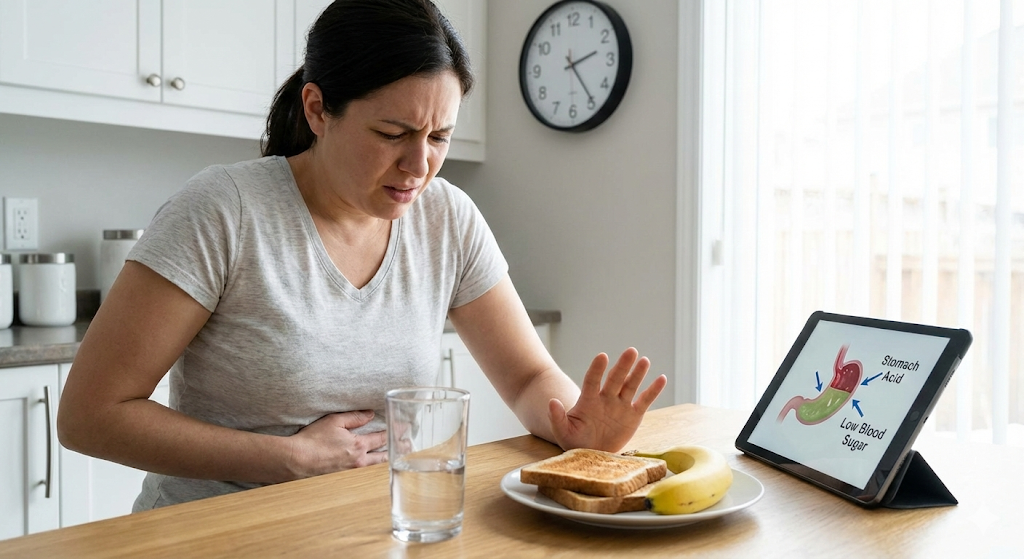
Your stomach does not wait for food to start working. It produces hydrochloric acid all time, especially when it expects a meal. When you go too long without eating, that acid has nothing to break down. It just sits there, irritating lining of your stomach. That irritation triggers nausea.
At same time, a hormone called ghrelin is telling your brain you need food. Ghrelin also makes your stomach contract and churn out even more acid. So your brain says "eat," but your stomach already irritated from all that acid sloshing around with nothing to absorb it.
On top of that, when you have not eaten for a while, your blood sugar drops. Your body responds by releasing stress hormones like adrenaline. Those hormones cause nausea, shakiness, and dizziness right alongside your hunger.
So its not your body being contradictory. It is a chain reaction. Empty stomach, excess acid, low blood sugar, stress hormones. They all pile up, and by time food arrives, your stomach already in a rough state.
What Causes Nausea When You Are Hungry and Try to Eat?
There are several reasons this pattern can keep repeating. Most of them are manageable once you figure out which one applies to you.
• Low blood sugar is one of most common triggers. If you skip meals, eat at irregular times, or have a condition like diabetes, your blood glucose can drop below normal levels. When that happens, your body goes into a mild stress response. Nausea is part of that response, right alongside hunger pangs.
• Excess stomach acid and gastritis are another frequent cause. Gastritis is when stomach lining gets inflamed. It can happen from too much acid, an infection, alcohol, or regular use of pain medications like ibuprofen. When your stomach already irritated and you try to eat, it can feel like adding pressure to a bruise. The food does not settle way it should.
• Acid reflux makes things worse too. When acid moves up from your stomach into your esophagus, it causes that burning feeling in your chest. This tends to get worse on an empty stomach. And eating certain foods, especially greasy or spicy ones, can set it off further. So you are hungry, you eat, and then reflux hits.
• Stress and anxiety play bigger role than most people realize. Your gut and your brain talk to each other constantly. When you are stressed, your body slows down digestion, tightens stomach muscles, and pumps out more acid. You might feel hungry because your body needs fuel, but your gut too wound up to handle it. If you have been dealing with an upset stomach alongside stress, that connection is worth paying attention to.
• Medications can be quiet culprit. NSAIDs like ibuprofen, certain antibiotics, antidepressants, and blood pressure medications are known to cause nausea as side effect. Taking them on an empty stomach makes it worse. If you started new medication around time this pattern began, that a clue worth mentioning to your doctor.
Most of these causes share one thing in common. An empty stomach plus an irritated gut. That pattern.
Could It Be Gastroparesis or Another Condition?
If this keeps happening no matter what you try, there are few less common conditions worth knowing about.
• Gastroparesis is one of them. It means your stomach empties food much slower than it should. The muscles in your stomach wall do not contract properly, so food just sits there. You feel full after few bites, nauseous, bloated, and sometimes in pain. According to National Institute of Diabetes and Digestive and Kidney Diseases, gastroparesis symptoms include feeling full shortly after starting meal, nausea, vomiting, and abdominal pain and bloating. Diabetes is most common known cause, but in many cases cause never identified.
Gastroparesis is not common. Roughly 10 out of 100,000 men and about 40 out of 100,000 women are affected. But symptoms that look like gastroparesis show up in about 1 in 4 adults. So its possible to have symptoms without having full condition. Either way, if your nausea persistent and paired with early fullness and bloating, it worth getting checked.
• Peptic ulcers can also cause this pattern. These are sores on stomach lining. They cause burning kind of pain that sometimes gets worse after eating. Nausea is common with them too.
• Gallbladder problems are another possibility, especially if nausea hits after fatty meals. When bile cannot flow properly, it builds up and irritates system.
Here is when you should not wait it out: nausea lasting more than two weeks, losing weight without trying, blood in your vomit, or severe stomach pain that does not ease up. These are signs your body needs professional attention.
How to Stop Feeling Sick When You Eat
The most effective thing you can do is stop letting your stomach stay empty for too long.
Eat smaller meals every 2 to 3 hours. You do not need full plate. Around 150 to 200 calories with some protein and complex carbs enough to keep blood sugar stable and prevent acid from building up with nothing to work on.
Sip water throughout day. Dehydration makes nausea worse and can mimic hunger. If you are not sure whether you are hungry or thirsty, drink glass of water first and wait 10 minutes.
Avoid known irritants on an empty stomach. Coffee, alcohol, spicy food, and NSAIDs all ramp up acid production when there nothing in your stomach to buffer it.
Ginger can help. Research supports ginger tea or small ginger capsules for easing nausea. Peppermint tea may also calm stomach muscles. These are not miracle fixes, but they can take edge off.
Track your patterns. Write down what you eat, when you eat, and when nausea shows up. You will probably notice pattern within week. That information useful for you and even more useful if you end up talking to doctor.
If nausea tends to hit during pregnancy, triggers and timing can shift. Third trimester nausea has its own set of causes and management strategies worth looking into separately.

When Should You Talk to a Doctor About This?
If this has been happening regularly for more than two weeks and small changes above are not helping, it is time to see someone.
Also see a doctor if you are losing weight without meaning to, you see blood when you vomit, you have severe stomach pain, or you simply cannot keep food down. These are not things to push through on your own.
A gastroenterologist can run specific tests to check stomach emptying, look for ulcers, and rule out conditions like gastroparesis. Getting answers early is always better than guessing.
Conclusion
Feeling hungry but like throwing up when you eat is not random. It is your body reacting to a buildup of acid, low blood sugar, or an irritated gut. Most of time, eating smaller and more often, staying hydrated, and cutting out irritants can break cycle.
Your stomach is telling you something. Let's figure out what. Whether it acid buildup, stress, or something you have not considered yet, August can help you sort through it. Start a conversation at meetaugust.ai.
Health Companion
trusted by
6Mpeople
Get clear medical guidance
on symptoms, medications, and lab reports.