
Health Library
Levofloxacin 500 mg Dosage for Adults: What You Should Know
February 15, 2026
Question on this topic? Get an instant answer from August.
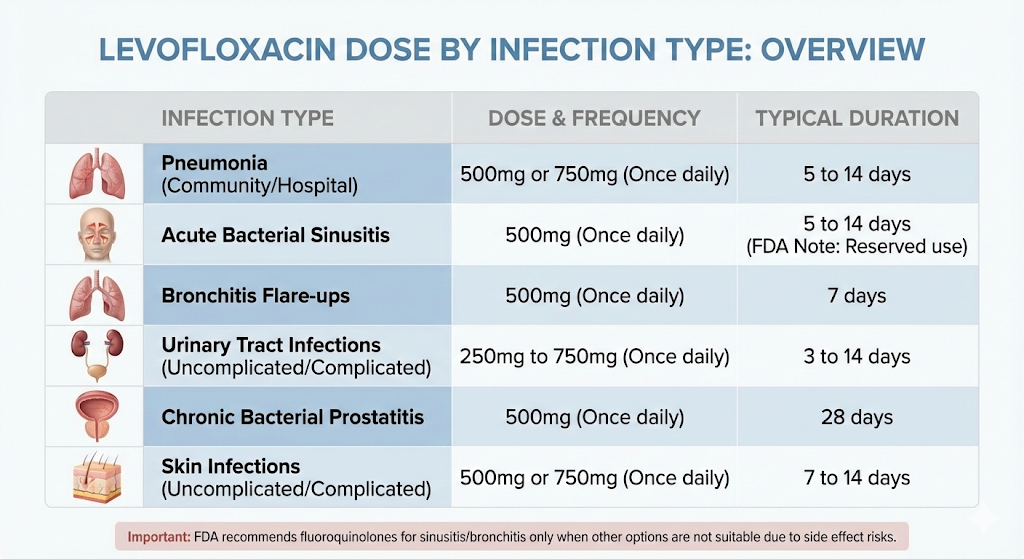
The typical levofloxacin dose for adults is 500 mg taken once a day, usually for 5 to 14 days depending on the infection. Some infections call for a higher 750 mg dose, and simpler ones may only need 250 mg. Your doctor decides exact dose and length of treatment based on what kind of infection you have and how severe it is.
Levofloxacin belongs to a class of antibiotics called fluoroquinolones. It works by stopping bacteria from copying their DNA, which prevents them from growing and spreading. It is a broad spectrum antibiotic, meaning it covers a wide range of bacteria. Doctors prescribe it for pneumonia, sinus infections, bronchitis flare ups, urinary tract infections, kidney infections, skin infections, and prostate infections. It does not work against viruses, so it will not help with a cold or flu.
How Does Dose Change by Infection?
The 500 mg once daily dose is one of most commonly prescribed strengths. But dose your doctor chooses depends entirely on what is being treated.
For community acquired pneumonia, standard approach 500 mg once a day for 7 to 14 days. There is also a shorter 5 day course using a higher 750 mg daily dose, which your doctor may prefer depending on the bacteria involved. For hospital acquired pneumonia, higher 750 mg dose for 7 to 14 days is more typical.
Acute bacterial sinusitis is usually treated with 500 mg once daily for 5 to 14 days. However, it is worth knowing that FDA has recommended that fluoroquinolones like levofloxacin should only be used for sinus infections when no other antibiotic options are suitable. This because of risk of serious side effects, which we will get into shortly.
For acute bronchitis flare ups in people with chronic lung disease, dose typically 500 mg once a day for 7 days. Again, this generally reserved for situations where simpler antibiotics have not worked or are not an option.
Uncomplicated urinary tract infections are treated with a lower dose of 250 mg once daily for just 3 days. Complicated urinary tract infections or kidney infections may need 250 to 750 mg daily for 5 to 14 days, depending on severity.
Chronic bacterial prostatitis requires a longer course. The standard is 500 mg once daily for 28 days. Skin infections are typically treated with 500 mg daily for 7 to 10 days for uncomplicated cases, or 750 mg daily for 7 to 14 days for complicated ones.
How Should You Take It?
Levofloxacin can be taken with or without food. Try to take it at the same time each day to maintain steady levels in your bloodstream.
Drink plenty of water while you are on levofloxacin. Staying hydrated helps drug pass through your kidneys smoothly and reduces risk of crystal formation in urine.
One thing to watch out for timing around certain other products. Antacids, iron supplements, calcium, magnesium, zinc, and sucralfate can interfere with how your body absorbs levofloxacin. If you take any of these, space them at least two hours before or two hours after your levofloxacin dose. This keeps antibiotic working at full strength.
Does Kidney Function Affect Dose?
Yes. Levofloxacin is primarily eliminated through kidneys. About 87% of drug leaves your body unchanged in your urine. If your kidneys are not filtering as efficiently as they should, medication can accumulate and raise risk of side effects.
For adults with a creatinine clearance below 50 mL per minute, dose adjustments are needed. The interval between doses gets longer or amount reduced. For people on dialysis, additional modifications are required.
Older adults are more likely to have some decline in kidney function. Your doctor may check your kidney levels before prescribing to make sure standard dose safe.
What About FDA Warning?
This is something worth understanding. Levofloxacin carries a boxed warning from the FDA, which most serious type of safety warning a medication can have. The warning covers several risks that can affect tendons, muscles, joints, nerves, and central nervous system.
The most well known risk is tendinitis and tendon rupture, particularly of Achilles tendon. This risk is higher in adults over 60, people taking corticosteroids, and those who have had organ transplants. Tendon problems can show up within hours or days of starting medication, or even months after finishing it.
Peripheral neuropathy, which involves nerve damage in hands and feet causing tingling, numbness, or pain, another concern. In some cases, this nerve damage can be permanent.
Central nervous system effects like confusion, dizziness, hallucinations, anxiety, depression, and insomnia have also been reported. These reactions can happen within hours to weeks after starting treatment.
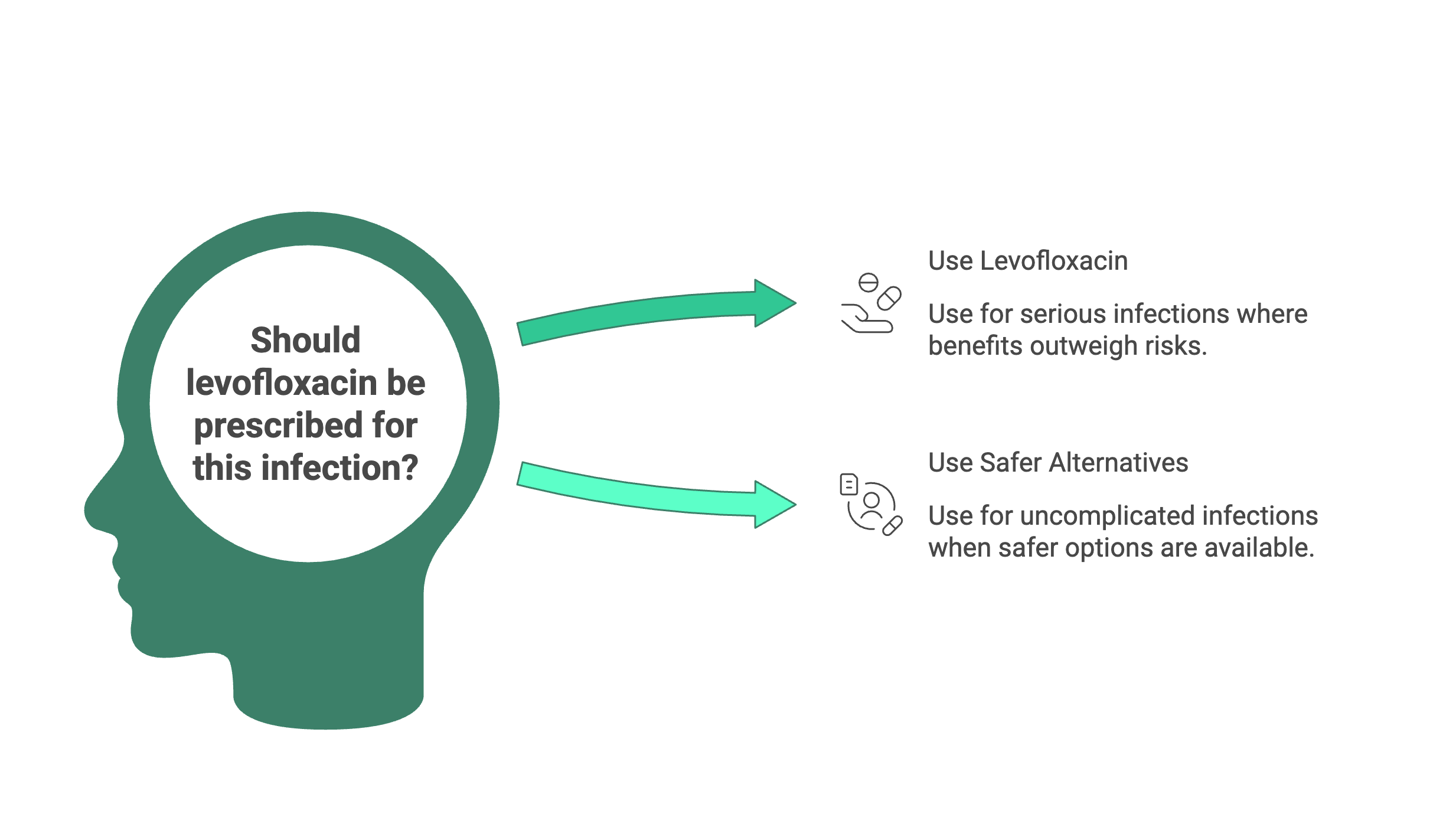
Because of these risks, FDA recommends that levofloxacin should not be used for uncomplicated infections like simple sinus infections, mild bronchitis, or straightforward urinary tract infections when safer alternatives are available. It typically reserved for more serious infections where benefits clearly outweigh risks.
What Are More Common Side Effects?
Beyond serious risks covered by warning, everyday side effects of levofloxacin tend to be more manageable. most frequently reported ones include nausea, diarrhea, headache, dizziness, and difficulty sleeping. Some people also notice increased sensitivity to sunlight, so it helps to limit sun exposure and wear sunscreen while taking it.
If you develop persistent diarrhea during or after treatment, let your doctor know. In rare cases, antibiotics including levofloxacin can cause a bacterial overgrowth in gut called C. difficile infection, which requires separate treatment.
When Should You Talk to Your Doctor?
Contact your doctor right away if you experience tendon pain or swelling, tingling or numbness in your hands or feet, confusion or unusual mood changes, a skin rash, or signs of an allergic reaction like difficulty breathing. Also reach out if your infection does not seem to be improving after several days of treatment.
Finish full course of medication even if you feel better before it done. Stopping early can allow bacteria to survive and develop resistance.
Health Companion
trusted by
6Mpeople
Get clear medical guidance
on symptoms, medications, and lab reports.