
Health Library
Levonorgestrel Interactions: What Can Reduce Its Effectiveness
February 23, 2026
Question on this topic? Get an instant answer from August.
Levonorgestrel is a synthetic progestin hormone used in several forms of birth control. You will find it in emergency contraceptive pills like Plan B, in daily oral contraceptives, and in hormonal IUDs like Mirena, Liletta, Kyleena, and Skyla. Each of these forms works a little differently, but they all rely on levonorgestrel doing its job without interference.
Which Medications Can Make Levonorgestrel Less Effective?
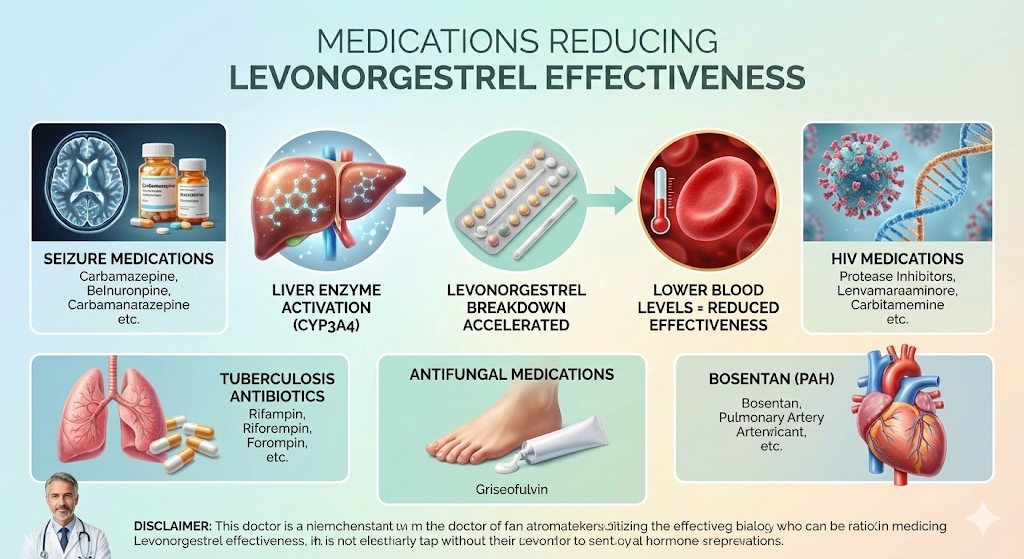
Several prescription medications can speed up how quickly your liver breaks down levonorgestrel. When hormone cleared from your body faster than expected, levels in your blood may drop too low to reliably prevent pregnancy.
Here are main medication categories to be aware of:
- Seizure medications like carbamazepine, phenytoin, phenobarbital, primidone, oxcarbazepine, and topiramate (at higher doses). These are among most well-documented drugs that reduce effectiveness of hormonal contraceptives.
- Certain HIV medications, especially some protease inhibitors and non-nucleoside reverse transcriptase inhibitors. The interaction varies depending on specific drug, so your HIV care provider and pharmacist should review your regimen together.
- Rifampin and rifabutin, antibiotics used mainly for tuberculosis. Rifampin is one of strongest enzyme inducers and can significantly lower levonorgestrel levels.
- Some antifungal medications like griseofulvin.
- Bosentan, a medication used for pulmonary arterial hypertension.
These drugs activate certain liver enzymes (particularly CYP3A4) that break down levonorgestrel faster. The result lower hormone levels in your blood, which can reduce contraceptive effectiveness across pills, emergency contraception, and even implants.
According to U.S. National Library of Medicine, some medications should not be taken with levonorgestrel-containing oral contraceptives, and you may need to use a backup contraceptive method while taking them. You can read full precaution details here: Levonorgestrel Oral Contraceptives
Does St. John's Wort Interact With Levonorgestrel?
Yes, and this one of most commonly overlooked interactions. St. John's wort an herbal supplement that many people take for mild depression or mood support. It available over counter, so people sometimes assume it is safe to combine with any medication.
But St. John's wort is a potent inducer of same liver enzymes that break down levonorgestrel. Taking it alongside levonorgestrel pills, emergency contraception, or even while using a hormonal IUD can reduce effectiveness of your birth control.
According to MedlinePlus, St. John's wort specifically flagged as a product that may interact with levonorgestrel. If you are using any form of levonorgestrel-based contraception, it best to avoid St. John's wort entirely or talk to your doctor about alternatives for mood support.
Does Body Weight Affect Levonorgestrel Emergency Contraception?
This is a topic that comes up often, especially around Plan B. Research suggests that levonorgestrel emergency contraception may be less effective in people with a higher body weight. Some studies have indicated that drug's effectiveness starts to decline at a body weight of around 165 pounds (75 kg) and may be significantly reduced above 176 pounds (80 kg).
This does not mean Plan B will not work at all for people in that weight range. But it does mean protection may be lower than expected. If this applies to you, your doctor may suggest an alternative emergency contraceptive, such as ulipristal acetate (sold as ella) or a copper IUD, both of which tend to maintain effectiveness regardless of weight.
If you are exploring how different birth control methods compare, especially lower-hormone options, this covers several approaches worth considering: Low Estrogen Birth Control Options
https://assets.getbeyondhealth.com/health-lib/blogs/manual_upload_20260223144306_levonrgestrel-antibiotics.png]
Do Antibiotics Affect Levonorgestrel?
This is one of most common questions people ask, and answer may surprise you. Most common antibiotics, like amoxicillin, azithromycin, and doxycycline, have not been shown to reduce effectiveness of levonorgestrel-based birth control.
The big exception is rifampin (and to a lesser degree, rifabutin). Rifampin a powerful enzyme inducer that clearly lowers hormonal contraceptive levels. But this antibiotic used mainly for tuberculosis, not for everyday infections like sinus or urinary tract infections.
So if your doctor prescribes a standard antibiotic for a common infection, your levonorgestrel birth control should still work as expected. But if you have any doubts, asking your pharmacist takes just a moment and can give you peace of mind.
Does Levonorgestrel IUD Have Same Interactions?
Hormonal IUDs like Mirena deliver levonorgestrel directly to uterus rather than relying on hormone levels in blood. Because of this local delivery, IUDs are generally considered less affected by drug interactions than oral forms of levonorgestrel.
That said, interaction data for IUDs and enzyme-inducing drugs is limited. Some healthcare providers still recommend caution or a backup method if you are using a levonorgestrel IUD and start taking a strong enzyme inducer like rifampin or certain seizure medications.
According to U.S. National Library of Medicine, levonorgestrel intrauterine system works primarily by thinning uterine lining and thickening cervical mucus, which is a local action that depends less on blood hormone levels. You can find more details about how IUD works here: Levonorgestrel IUD
If you have recently had an IUD placed and are wondering about timing and what to expect, this resource answers common questions about adjustment period: How Long After Getting an IUD Can You Have Sex?
What Should You Tell Your Doctor?
Every time you start a new medication, supplement, or herbal product, let your doctor and pharmacist know that you are using levonorgestrel-based birth control. This applies whether you are on a daily pill, using emergency contraception, or have an IUD.
Here is a quick checklist of what to mention:
- All prescription medications, including new ones and recent changes
- Otc drugs, especially antacids, anti-seizure supplements, and herbal products
- St. John's wort or any mood-related supplements
- Any plans to start or stop a medication
A brief conversation can prevent an unintended gap in your protection.
Bottom Line
Levonorgestrel is a widely used and effective hormone, but it does not work in isolation. Certain seizure medications, HIV drugs, rifampin, and St. John's wort can all lower its effectiveness by speeding up how your liver processes hormone. Body weight may also play a role with emergency contraceptive pills.
The good news that these interactions are well documented and manageable. Your doctor or pharmacist can help you choose a backup method or an alternative if any of your medications overlap with levonorgestrel.
Health Companion
trusted by
6Mpeople
Get clear medical guidance
on symptoms, medications, and lab reports.