
Health Library
Itchy Rash on Stomach: Causes and Treatment Options
February 17, 2026
Question on this topic? Get an instant answer from August.
An itchy rash on your stomach can feel really uncomfortable. It can also make you worry about what is going on. The good news is that most stomach rashes have simple, treatable causes. Your skin reacting to something, and once you figure out what, you can usually find relief pretty quickly.
What Causes an Itchy Rash on Stomach?
Most of time, an itchy stomach rash comes from your skin reacting to an irritant or allergen. Your skin has immune cells built right into it. When those cells detect something they do not like, they trigger inflammation. That inflammation is what you see and feel as a rash.
The stomach area especially prone to rashes. Clothing sits close against it all day. Sweat can build up there. Products like laundry detergent, body wash, or lotion sit directly on this skin for hours.
So let us look at most common triggers first. These are ones doctors see again and again.
What Are Most Common Reasons for a Stomach Rash?
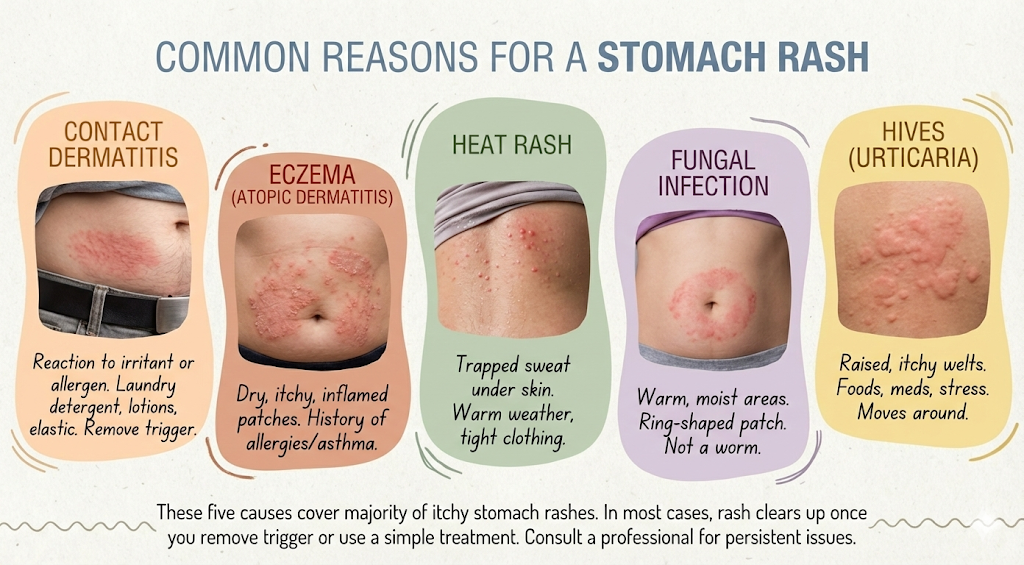
- Contact dermatitis. This happens when your skin touches something that irritates it or triggers an allergic reaction. Common culprits include new laundry detergent, fabric softener, body lotion, belt buckles, or waistband elastic. The rash usually shows up right where irritant touched your skin.
- Eczema (atopic dermatitis). Eczema causes dry, itchy, inflamed patches of skin. It can appear anywhere on body, including stomach. People with eczema often have a history of allergies or asthma in their family.
- Heat rash. When sweat gets trapped under your skin, small red bumps can form. This common in warm weather or if you wear tight clothing. The stomach is a frequent spot for heat rash because clothing presses against it.
- Fungal infection. Fungi love warm, moist areas of body. A fungal rash on stomach may appear as a red, ring-shaped patch with raised edges. This sometimes called ringworm, even though no worm is involved.
- Hives (urticaria). Hives are raised, itchy welts that can pop up suddenly. They can appear after eating certain foods, taking a new medication, or experiencing stress. They often move around and may disappear within hours.
These five causes cover majority of itchness stomach rashes. In most cases, rash clears up once you remove trigger or use a simple treatment.
Could It Be an Allergic Reaction?
Yes, and this is actually one of more common explanations. Allergic contact dermatitis happens when your immune system overreacts to something touching your skin. The tricky part is that you might not react first time you encounter substance. It can take repeated exposure before your body develops sensitivity.
Some common allergens that cause stomach rashes include nickel in belt buckles or jean buttons, latex in clothing waistbands, fragrances in soaps or lotions, and dyes in fabric. If you recently switched any product that touches your stomach area, that could be trigger.
An allergic rash usually stays in area where substance touched your skin. It may feel itchy, red, and slightly swollen. Sometimes small blisters can form too.
What About Less Common Causes?
While everyday triggers explain most cases, there are a few less common possibilities that are still worth mentioning.
- Psoriasis. This is a chronic condition where skin cells build up too quickly. It creates thick, scaly patches that can be itchy or sore. Psoriasis can appear on stomach, though it more commonly affects elbows, knees, and scalp.
- Shingles. If you had chickenpox as a child, virus stays dormant in your body. It can reactivate years later as shingles. This causes a painful, blistering rash that usually appears in a band or strip on one side of body, including stomach area.
- Scabies. These are tiny mites that burrow into your skin and cause intense itching, especially at night. The rash often appears as small, raised lines or bumps. Scabies can affect stomach, wrists, and between fingers.
- Drug reactions. Some medications can cause rashes as a side effect. These rashes may appear days or even weeks after starting a new medication. They can show up on stomach and spread to other parts of body.
These conditions are less frequent, but they do happen. If your rash does not match any of common causes, these are worth considering.
When Should You See a Doctor?
Most itchy stomach rashes are not dangerous. But there are certain signs that mean you should check in with a healthcare provider.
You should see a doctor if rash lasts longer than two weeks without improving. A rash that spreads quickly, comes with fever, or develops pus or oozing also deserves attention. If you have severe itching that keeps you up at night, that is worth mentioning too. A rash that appears as a painful band of blisters on one side of your body could be shingles and needs prompt treatment.
Your doctor will not judge you for coming in about a rash. Skin concerns are one of most common reasons people visit their healthcare provider.
What Can You Do at Home to Find Relief?
While you figure out cause, some gentle home care steps can help calm itch and soothe your skin.
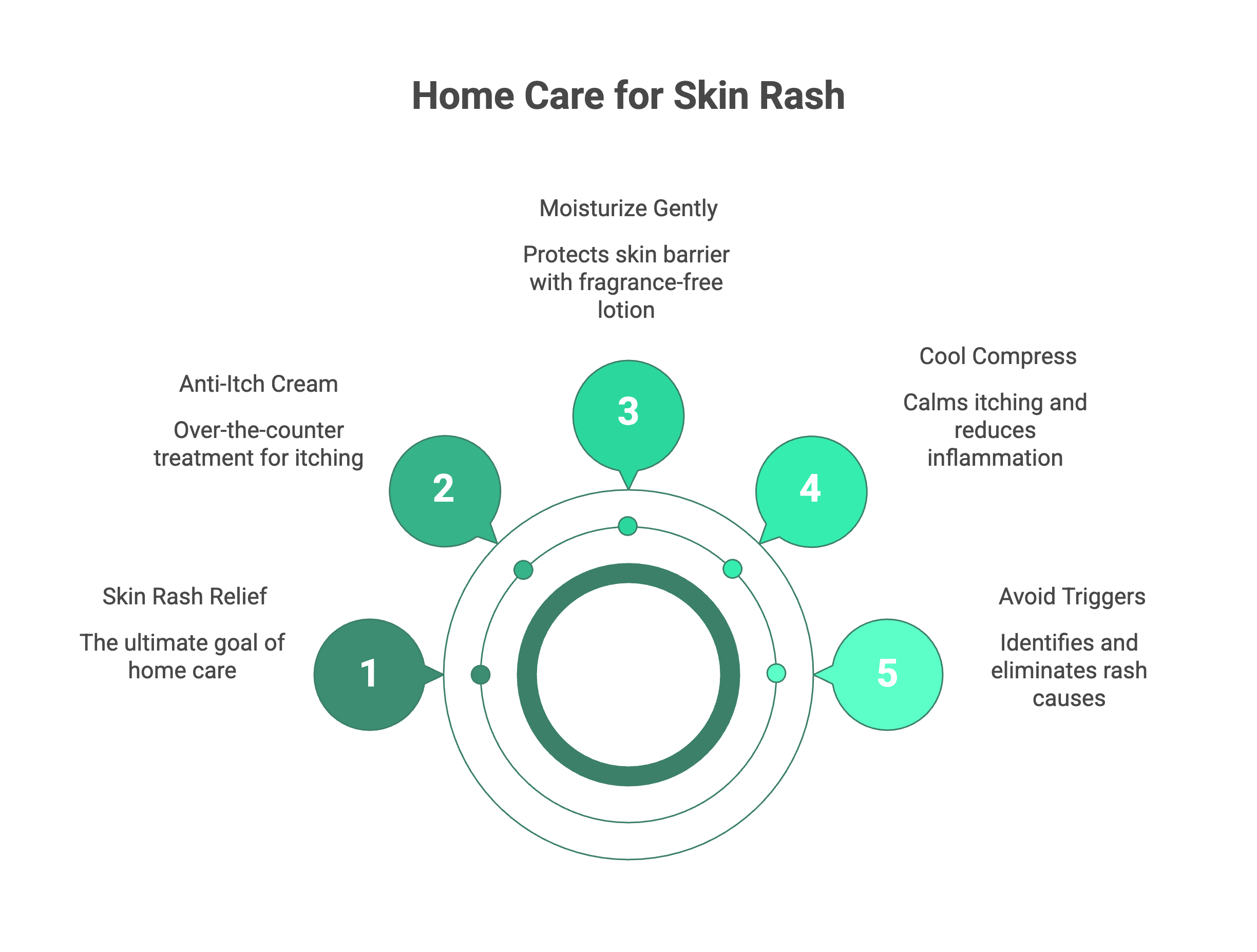
1. Avoid suspected trigger. If you recently changed your detergent, soap, or lotion, switch back and see if rash improves.
2. Keep area cool and dry. Wear loose, breathable cotton clothing to reduce friction and sweating.
3. Apply a cool compress. A damp, cool cloth placed over rash for 10 to 15 minutes can calm itching and reduce inflammation.
4. Moisturize gently. Use a fragrance-free, hypoallergenic moisturizer to keep skin barrier protected.
5. Try an over-the-counter anti-itch cream. Hydrocortisone cream or calamine lotion can help reduce itching and redness for mild rashes.
These steps are simple, but they can make a noticeable difference while you wait for things to settle down.
Does Scratching Make It Worse?
It really does. Scratching feels good in moment, but it damages your skin barrier. That damage can lead to more inflammation, more itching, and even infection. It creates a cycle that hard to break.
If urge to scratch is overwhelming, try pressing a cool cloth against area instead. Keeping your nails short can also help reduce damage if you scratch without realizing it, especially during sleep.
Reference, what triggers them, and when they need medical attention, the National Institutes of Health has a clear and helpful guide: Red, Itchy Rash?. For more about sinusitis and how immune reactions can sometimes show up on the skin, MedlinePlus covers it here: Rashes Overview. You might also find this blog on understanding eczema and itchy skin useful if your rash keeps coming back: What is Dermatitis-Eczema?.
The Bottom Line
An itchy rash on your stomach is usually your skin telling you it does not agree with something. Most of the time, cause is something simple like an irritant, an allergen, or trapped sweat. With a little detective work and some gentle home care, you can often figure out what is going on and find relief.
If rash sticks around, spreads, or comes with other symptoms, your doctor can help you get to bottom of it. You deserve to feel comfortable in your own skin.
Health Companion
trusted by
6Mpeople
Get clear medical guidance
on symptoms, medications, and lab reports.