
Health Library
Tamiflu 75 mg Dosage for Adults: How and When to Take It
February 15, 2026
Question on this topic? Get an instant answer from August.
The standard Tamiflu dose for adults is 75 mg taken twice a day for 5 days. That means one 75 mg capsule in the morning and one in evening. This is a recommended dose for treating flu in adults and teenagers aged 13 and older. For it to work best, you need to start taking it within 48 hours of your first flu symptoms.
Tamiflu is the brand name for oseltamivir, an antiviral medication. It does not cure the flu, and it is not the same as a flu vaccine. What it does is slow down viruses from spreading inside your body. This gives your immune system a better chance to fight it off. Research shows that when started early enough, Tamiflu can shorten illness by about one dayand may reduce risk of complications like pneumonia, especially in people who are older or have underlying health conditions.
Why Does Timing Matter So Much?
Tamiflu works by blocking a protein flu virus needs to make copies of itself. earlier you take it, fewer virus particles have had a chance to multiply. After 48 hours of symptoms, the virus has already spread significantly through your body, and medication becomes much less effective.
So if you wake up with a sudden fever, body aches, sore throat, and chills, and you suspect flu, it worth contacting your doctor sooner rather than later. Your doctor does not necessarily need a lab confirmed flu test to prescribe Tamiflu. Many providers will prescribe it based on your symptoms, especially during flu season.
That said, even if more than 48 hours have passed, your doctor may still recommend Tamiflu in certain situations. People who are hospitalized, have severe symptoms, or are at high risk for flu complications may benefit from treatment even when started later.
Can You Take Tamiflu to Prevent the Flu?
Yes. Tamiflu is also approved for flu prevention, and dose is a little different. For prevention, recommended adult dose is 75 mg taken once a day for at least 10 days after close contact with someone who has flu. You take just one capsule a day instead of two.
If your community is experiencing a flu outbreak, your doctor might recommend taking Tamiflu for up to 6 weeks as a preventive measure. For people with weakened immune systems, preventive course can extend up to 12 weeks. This is especially helpful if you were not able to get a flu shot or if you are in a high risk group, like older adults or people with chronic health conditions.
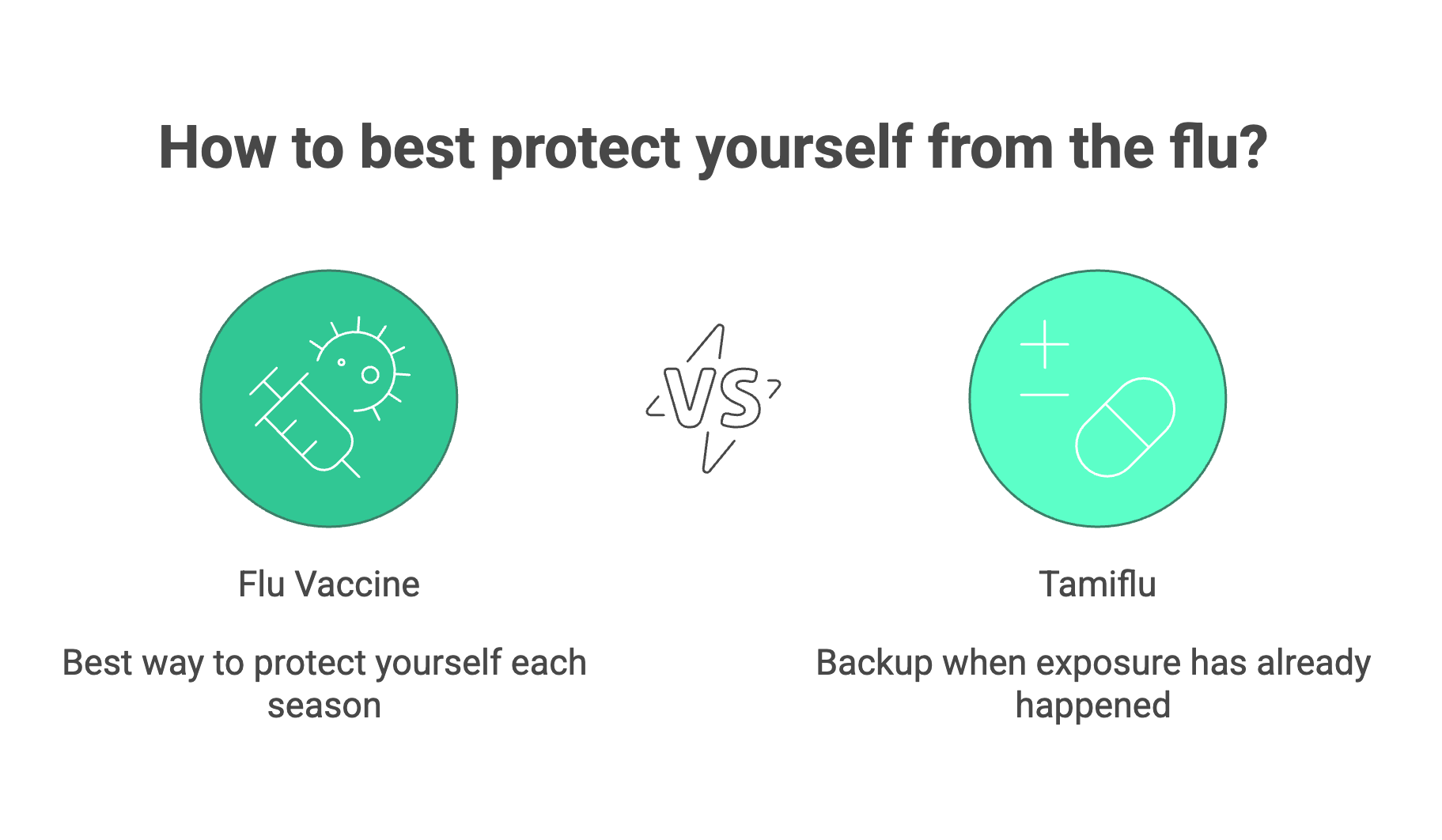
It is important to understand that Tamiflu does not replace flu vaccine. The annual flu shot still best way to protect yourself each season. Tamiflu is more of backup when exposure has already happened.
Should You Take It With Food?
You can take Tamiflu with or without food. However, taking it with meal or snack can help reduce nausea and stomach upset, which are among the most common side effects. If you notice that medication bothers your stomach, try having it right after eating. Even something small like crackers or toast can make a difference.
Try to keep your doses about 12 hours apart. If you take your first dose with breakfast, aim for second dose with dinner. Consistent timing helps keep steady levels of the medication in your system.
What If You Have Kidney Problems?
This is an important detail. Tamiflu is cleared from your body through the kidneys. If your kidneys are not working as well as they should, medication can build up and increase risk of side effects. For adults with moderate kidney impairment, meaning creatinine clearance between 30 and 60 mL per minute, treatment dose is reduced to 30 mg twice day. For those with more severe impairment, between 10 and 30 mL per minute, dose drops further to 30 mg once day.
People on dialysis may also need adjusted dosing and timing, so your doctor will work out the right plan based on your kidney function. If you know you have kidney issues, make sure your prescriber is aware before starting Tamiflu.
For older adults, kidney function naturally declines with age. Even if you have not been diagnosed with kidney disease, your doctor may check your levels before prescribing to make sure the standard 75 mg dose is appropriate.
What Are Common Side Effects?
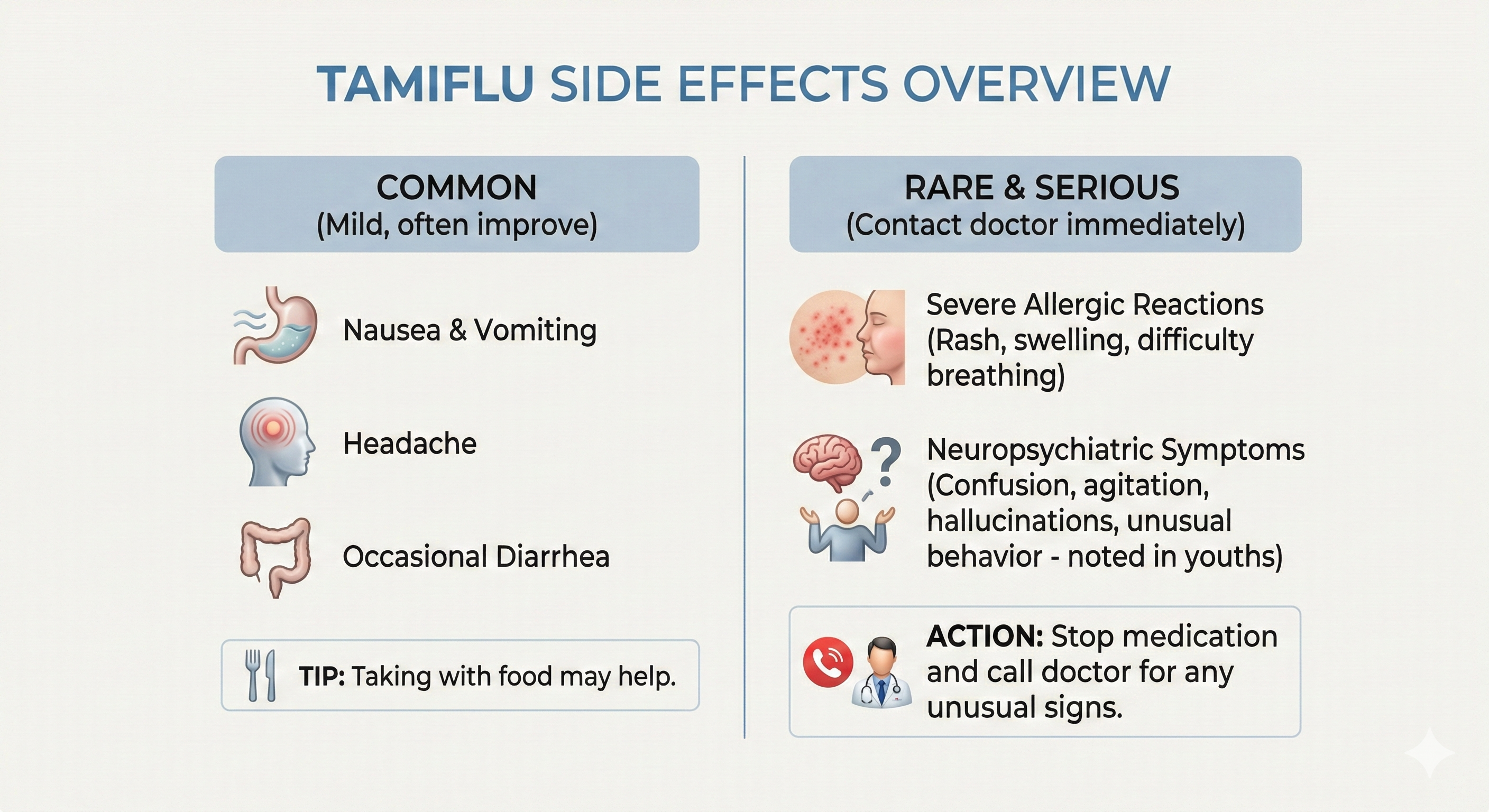
Most people tolerate Tamiflu well. The most frequently reported side effects in adults are nausea, vomiting, headache, and occasional diarrhea. These tend to show up within the first couple of days of treatment and usually improve on their own. Taking medication with food helps with stomach-related effects.
In rare cases, more serious reactions have been reported. These include severe allergic reactions like skin rash, swelling of face or throat, and difficulty breathing. There have also been uncommon reports of neuropsychiatric symptoms like confusion, agitation, hallucinations, and unusual behavior. These have been observed more in children and teenagers than in adults, and it remains unclear whether these are caused by medication itself or by flu.
If you notice anything unusual like rash, behavioral changes, or signs of an allergic reaction, stop taking medication and contact your doctor right away.
What If You Miss Dose?
If you miss dose and remember within couple of hours, go ahead and take it. But if it almost time for your next scheduled dose, skip the missed one and continue as normal. Do not take double dose to make up for it.
Even if you start feeling better before 5 days are up, finish the full course. Stopping early may allow virus to bounce back or develop resistance to medication.
When Should You Talk to Your Doctor?
Reach out to your doctor if your symptoms are not improving after few days of treatment, or if they are getting worse. Also contact them if you develop high or persistent fever, trouble breathing, chest pain, or severe vomiting that prevents you from keeping medication down. These could be signs that flu is progressing or that you need additional care.
Health Companion
trusted by
6Mpeople
Get clear medical guidance
on symptoms, medications, and lab reports.