
Health Library
Tirzepatide and Body Aches: Why It Happens and What Helps
February 21, 2026
Question on this topic? Get an instant answer from August.
Body aches are not listed as one of most common side effects of tirzepatide in the FDA prescribing information. The most frequently reported adverse reactions are gastrointestinal, including nausea, diarrhea, vomiting, and decreased appetite. However, some people do experience muscle pain, joint soreness, and general body aches after starting tirzepatide, and postmarketing case reports have documented musculoskeletal complaints that deserve attention.
Are Body Aches a Recognized Side Effect?
Not officially in top tier. clinical trials for both Mounjaro (tirzepatide for diabetes) and Zepbound (tirzepatide for weight management) did not identify body aches or muscle pain as a common adverse event occurring more frequently than with placebo. However, back pain was reported in SURPASS trial data at rates above 3% in some groups.
A case report series published in PMC documented patients who experienced musculoskeletal pain and myalgia (muscle aches) after starting tirzepatide. In one case, symptoms worsened with dose escalation, suggesting a possible dose dependent effect. In another case, symptoms improved after changing injection site. The authors noted that while musculoskeletal discomfort was reported in some trial participants, intensity and persistence seen in these real world cases stood out.
Musculoskeletal and connective tissue disorders have also been reported in FDA Adverse Event Reporting System (FAERS) database since tirzepatide became available.
Why Might Tirzepatide Cause Body Aches?
Even though tirzepatide does not appear to directly target muscle or joint tissue, there are several indirect reasons why you might feel achy after starting it.
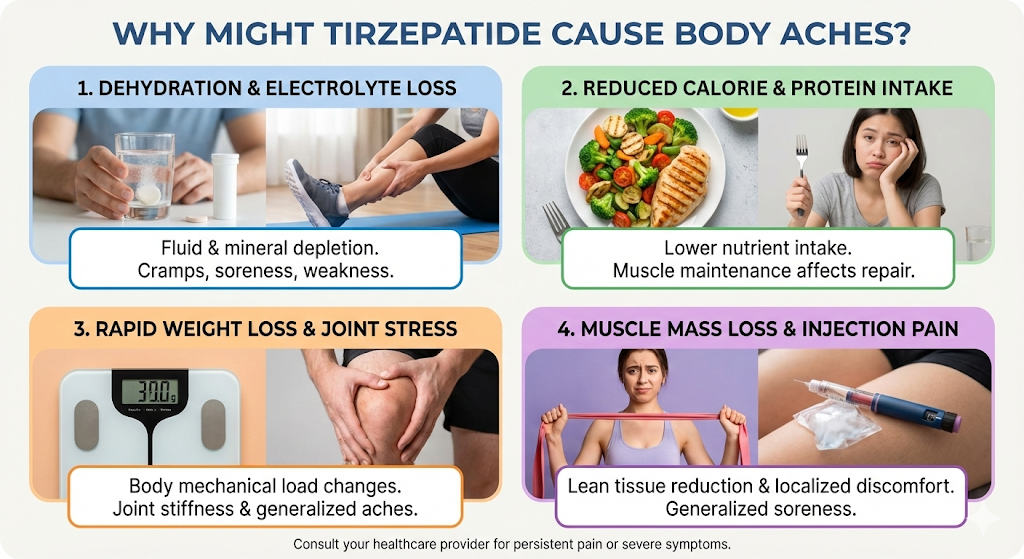
Dehydration and electrolyte loss. This is probably most common culprit. Tirzepatide commonly causes nausea, vomiting, and diarrhea, especially during first weeks and after dose increases. These GI side effects can lead to dehydration and a loss of important electrolytes like potassium, magnesium, and sodium. Low levels of these minerals can cause muscle cramps, soreness, weakness, and generalized body aches. If you are experiencing persistent GI symptoms alongside body aches, checking your electrolyte levels is a good first step. This guide on low potassium symptoms and causes explains what to watch for.
Reduced calorie intake. Tirzepatide significantly suppresses appetite. Many users eat far less than they did before starting medication. When your body takes in fewer calories and fewer nutrients over a sustained period, muscle fatigue and achiness can follow. Protein intake tends to drop most, which directly affects muscle maintenance and repair.
Rapid weight loss. Losing weight quickly changes how your body distributes mechanical load across your joints and muscles. Your body adapts to carrying a certain amount of weight, and when that changes significantly over a short period, your musculoskeletal system needs time to adjust. This can show up as joint stiffness, muscle soreness, or generalized aches, especially in knees, hips, and lower back.
Muscle mass loss. When you lose weight rapidly, you do not only lose fat. Some amount of lean muscle mass is also lost, especially if protein intake is low and physical activity drops. Losing muscle mass can make your body feel weaker and more prone to soreness during everyday activities.
Injection site related discomfort. Some people experience localized pain that radiates from injection site. In one of documented case reports, a patient's musculoskeletal pain improved after switching to a different injection area. This suggests that tissue irritation or inflammation at injection site can sometimes contribute to broader discomfort.
Can Body Aches Get Worse With Higher Doses?
Possibly. One of case reports in published series showed a pattern where musculoskeletal symptoms worsened as tirzepatide dose was increased. This could be related to stronger appetite suppression at higher doses leading to greater calorie and nutrient deficits, more pronounced GI side effects causing worse dehydration, or a more significant pharmacological effect at higher doses.
If your body aches seem to get worse every time your dose goes up, let your doctor know. They may slow down dose escalation or hold you at a lower maintenance dose for longer.
How Can You Manage Body Aches?
There are several practical things you can do to reduce or prevent body aches while on tirzepatide.
Stay hydrated. Drink water consistently throughout day, especially if you are experiencing nausea, vomiting, or diarrhea. Adding an electrolyte drink can help replace what you are losing.
Prioritize protein. Even though your appetite is reduced, try to eat enough protein at each meal. Aim for at least 60 to 80 grams of protein per day (your doctor or dietitian can give you a more specific target). This helps preserve muscle mass during weight loss.
Move regularly. Light to moderate exercise like walking, stretching, or resistance training can actually reduce body aches rather than make them worse. Staying active helps maintain muscle strength, joint flexibility, and circulation.
Rotate your injection sites. If you notice that aches seem concentrated near your injection area, try rotating between abdomen, thigh, and upper arm. Proper injection site rotation can reduce localized tissue irritation.
Monitor your nutrient levels. If body aches persist, ask your doctor to check your electrolytes, vitamin D, B12, and magnesium levels. Deficiencies in any of these can cause or worsen muscle pain and fatigue.
If you are curious about what other physical symptoms Mounjaro users have reported, this article on whether Mounjaro causes body aches covers experience in more detail.
When Should You Call Your Doctor?
Most body aches on tirzepatide are mild and manageable. But certain symptoms need prompt attention:
- Severe muscle pain, tenderness, or weakness that limits daily activities
- Dark or tea colored urine (this can be a sign of rhabdomyolysis, a rare but serious condition involving muscle breakdown)
- Swelling, redness, or warmth in a specific joint
- Body aches accompanied by fever or chills
- Symptoms that worsen with each dose increase and do not improve between doses
Rhabdomyolysis is extremely rare, but it has been reported in at least one case linked to tirzepatide use. In that case, a patient developed severe muscle breakdown that required hospitalization, and condition resolved after stopping medication.
Bottom Line
Body aches on tirzepatide are not among most common side effects, but they do happen. The most likely causes are dehydration from GI side effects, reduced nutrient intake, rapid weight loss affecting your musculoskeletal system, and muscle mass loss from lower calorie and protein intake. Staying hydrated, eating enough protein, exercising regularly, and rotating injection sites can all help. If your aches are severe, worsening, or accompanied by dark urine or significant weakness, see your doctor promptly.
Health Companion
trusted by
6Mpeople
Get clear medical guidance
on symptoms, medications, and lab reports.