
Health Library
Unrefined vs Refined Coconut Oil for Skin: Which One Is Better?
February 19, 2026
Question on this topic? Get an instant answer from August.
If you are trying to pick between unrefined and refined coconut oil for your skin, here is the short answer. Unrefined coconut oil keeps more of its natural nutrients and works better for most skincare needs. Refined coconut oil is more processed, lighter in texture, and has no coconut scent.
But the right choice really depends on your skin type, what you are using it for, and how your skin reacts.
What Is Difference Between Unrefined and Refined Coconut Oil?
The main difference comes down to how each oil made. That processing gap changes what ends up on your skin.
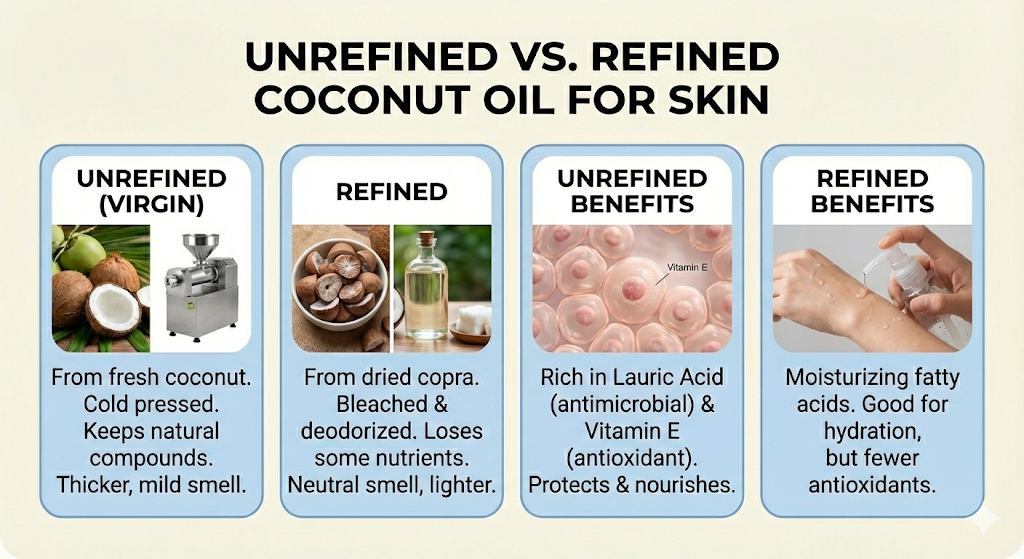
Unrefined coconut oil is also called virgin or extra virgin coconut oil. It comes from fresh coconut meat and is cold pressed without high heat or chemicals. This gentle process keeps the oil's natural antioxidants, vitamins, and fatty acids intact. It has a mild coconut smell and a thicker texture.
Refined coconut oil starts from dried coconut meat called copra. The oil goes through bleaching and deodorizing to remove impurities and scent. This is not chemical bleaching. It is filtered through a clay substance. The result a neutral smelling, lighter oil. But extra processing strips away some antioxidants and polyphenols that benefit skin.
Which One Has More Skin Benefits?
Unrefined coconut oil holds onto more of good stuff your skin can actually use.
It is rich in lauric acid, a fatty acid with natural antimicrobial properties. Lauric acid can help fight bacteria on skin's surface, which may support clearer skin and protect small cuts or dry patches from infection.
Unrefined coconut oil also retains higher levels of vitamin E, an antioxidant that helps protect skin cells from environmental stress like sun exposure and pollution. Over time, this can support healthier and more even looking skin.
Refined coconut oil still contains moisturizing fatty acids and can hydrate skin. But it has lower antioxidant levels and fewer natural plant compounds.
Is Coconut Oil Good for Dry Skin?
Yes, and this where coconut oil really shines. Both types can help with dry skin, but unrefined coconut oil tends to do a better job.
The fatty acids in unrefined coconut oil penetrate outer layer of skin and help lock in moisture. This makes it a solid option for rough patches on elbows, knees, or heels. It can also work as an overnight moisturizer for very dry areas.
If your skin feels tight or flaky, a thin layer of unrefined coconut oil after a shower can help seal in moisture. This especially helpful during colder months when dry air strips hydration faster.
Sometimes dry skin or unusual skin changes can also signal a nutritional gap. If you have noticed unexplained white spots or patches on your skin, understanding which vitamin deficiency may be involved can be helpful.
Can Coconut Oil Clog Pores or Cause Breakouts?
This is an important question, especially if your skin leans oily or acne prone.
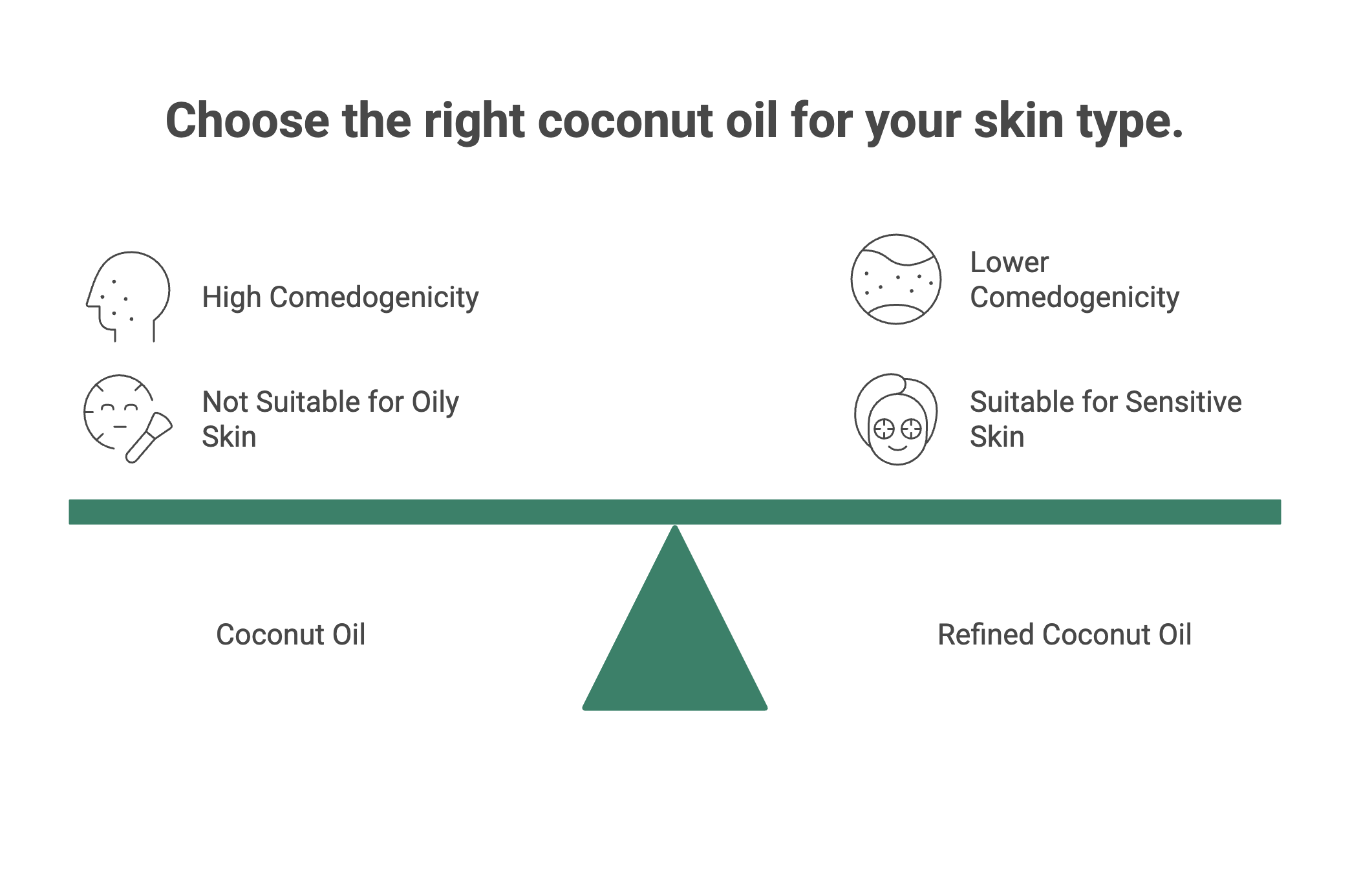
Coconut oil is considered comedogenic, which means it has potential to clog pores. On a scale of 0 to 5, coconut oil sits at about a 4. That fairly high. For people with oily or acne prone skin, applying coconut oil directly to face can lead to clogged pores, whiteheads, or breakouts.
Refined coconut oil is lighter and absorbs a bit differently, which is why some people with sensitive skin prefer it. But even refined versions can still trigger breakouts on certain skin types.
If you are prone to clogged pores or bumps that look like acne but do not respond to typical treatments, the issue might be more specific than you think. Learning difference between closed comedones and fungal acne can help you figure out what your skin actually needs.
As a general rule, coconut oil works better on body than face for people who break out easily. Arms, legs, and feet tend to tolerate it well without pore issues.
What About Sensitive Skin?
If your skin reacts easily, you want to be careful with either type.
Unrefined coconut oil contains natural plant compounds that are generally gentle. But the coconut scent and thicker consistency can sometimes irritate very reactive skin.
Refined coconut oil, with its neutral scent and lighter feel, may be easier for sensitive skin to tolerate. Just make sure brand uses steam refining rather than chemical solvents like hexane. Look for labels that say organic and expeller pressed.
Test a small amount on your inner forearm for a day or two before applying it to larger areas.
How Should You Use Coconut Oil on Your Skin?
Here are some practical ways to work coconut oil into your routine:
- As a body moisturizer after a shower, while your skin still slightly damp.
- As an overnight treatment for cracked heels or rough elbows.
- As a gentle makeup remover for waterproof products. Follow with a cleanser to avoid residue.
- As a cuticle oil to soften dry skin around your nails.
Start with a small amount. A little goes a long way, and too much can leave your skin feeling greasy rather than hydrated.
So Which One Should You Choose?
For most skincare uses, unrefined coconut oil stronger choice because it retains more nutrients and antioxidants. It works especially well for dry skin, body moisturizing, and overnight treatments.
Refined coconut oil can be a good option if you prefer no scent, need a lighter texture, or have skin that reacts to natural compounds in virgin oil.
If your skin is oily or acne prone, use either type with caution on your face. Stick to body application and patch test first. The best coconut oil for your skin is one your skin actually tolerates well.
Health Companion
trusted by
6Mpeople
Get clear medical guidance
on symptoms, medications, and lab reports.