
Health Library
Ventolin Side Effects: What to Expect
February 23, 2026
Question on this topic? Get an instant answer from August.
Ventolin is a brand name for albuterol, a medication that helps you breaeasier. It belongs to a class of drugs called bronchodilators. These work by relaxing and opening air passages in your lungs. Doctors commonly prescribe it for asthma, chronic obstructive pulmonary disease (COPD), and exercise related breathing difficulty.
What Are Most Common Side Effects of Ventolin?
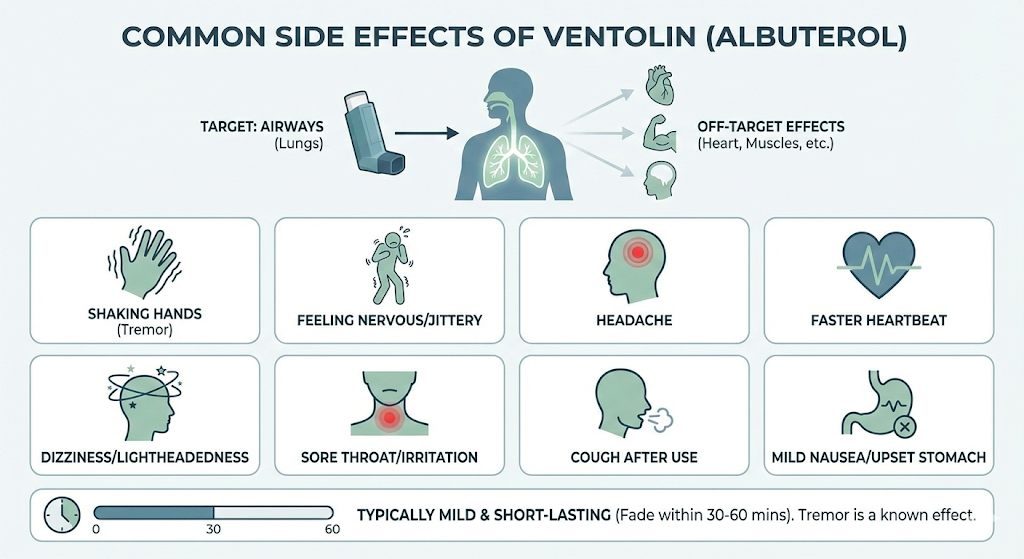
The side effects most people notice are related to how medication works. Albuterol stimulates certain receptors in your body to open up your airways. But those same receptors exist in other areas too, like your heart and muscles. That is why you might feel some effects beyond your lungs.
Here are side effects that people report most often:
- Shaking or trembling in hands (tremor)
- Feeling nervous or jittery
- Headache
- Faster heartbeat than usual
- Dizziness or lightheadedness
- Sore throat or throat irritation
- Cough after inhaling medication
- Mild nausea or upset stomach
These reactions are usually mild. They tend to happen shortly after using inhaler and fade within 30 minutes to an hour. The shaking hands, in particular, can feel strange if you are not expecting it. But this is one of most well documented effects of bronchodilator medications. According to U.S. National Library of Medicine, asthma medicines like albuterol are a recognized cause of drug induced tremor. You can read here: Drug Induced Tremor
If these common effects bother you or do not fade quickly, your doctor may suggest adjusting your dose or checking your inhaler technique.
Does Ventolin Affect Your Heart?
This is a question many people have, and it a fair one. Yes, albuterol can affect your heart rate. Because it stimulates beta receptors, it may cause your heart to beat faster or feel like it pounding. Some people describe this as heart palpitations.
For most healthy people, this is temporary and harmless. But if you have a history of heart disease, high blood pressure, irregular heartbeat, or hyperthyroidism (an overactive thyroid), effect on your heart may be more noticeable. That why your doctor should know your full medical history before prescribing Ventolin.
If you ever feel chest pain, a very rapid heartbeat, or a fluttering sensation that does not go away after a few minutes, reach out to your doctor or seek medical help.

Can Ventolin Cause Throat or Mouth Problems?
Yes, some people notice a dry mouth, sore throat, or hoarseness after using their inhaler. This happens because medication passes through your mouth and throat on its way to your lungs.
A simple habit can help reduce this. Rinse your mouth with water after each use. This washes away any medication that settled on your throat tissues instead of reaching your lungs. If you use a spacer device with your inhaler, it can also help direct more of medication where it needs to go.
If you take other inhaled medications alongside Ventolin, like a corticosteroid inhaler for long term asthma control, you can learn here: Beclomethasone Inhalation Uses and Side Effects
Are There Any Serious Side Effects to Watch For?
Serious side effects from Ventolin are uncommon. But they do exist, and knowing them can help you act quickly if something feels off.
These are reactions that need prompt medical attention:
- Chest pain or tightness that does not ease up
- A very fast, irregular, or pounding heartbeat that persists
- Worsening breathing difficulty right after using inhaler (this called paradoxical bronchospasm)
- Severe allergic reaction with swelling of face, lips, tongue, or throat
- Skin rash, hives, or itching that spreads
- Significant drop in potassium levels, which can cause muscle cramps, weakness, or an irregular heartbeat
Paradoxical bronchospasm deserves special attention. It means that instead of opening your airways, inhaler makes them tighten. According to MedlinePlus, a resource from U.S. National Library of Medicine, this can happen especially first time you use a new canister. If your breathing suddenly gets worse right after a puff, stop using inhaler and call your doctor immediately. You can find more detailed guidance on albuterol from this government resource: Albuterol Oral Inhalation
Can Overusing Ventolin Cause Problems?
Yes. Ventolin is meant to be used as needed, typically every four to six hours. Using it more often than prescribed can increase intensity of side effects like tremor, rapid heartbeat, and nervousness.
More importantly, if you find yourself reaching for your inhaler more often than usual, that may be a sign that your underlying condition not well controlled. This does not mean Ventolin failing you. It could mean you need an additional medication, like a daily controller inhaler, to manage inflammation in your airways.
Never increase your dose without talking to your doctor first. If your rescue inhaler is not giving you enough relief, that a conversation worth having sooner rather than later.
Does Ventolin Interact With Other Medications?
Albuterol can interact with several other medications. This is especially true for certain antidepressants, other bronchodilators, beta blockers, and diuretics (water pills). Some cold medicines that contain stimulants like pseudoephedrine can also increase jittery or heart racing effects of Ventolin.
Always let your doctor and pharmacist know about every medication you take, including over the counter drugs and supplements. They can check for interactions and adjust your treatment plan if needed. If you are managing a respiratory condition with multiple medications, understanding how different drugs work together matters. This resource covers a related asthma medication and how it works: Aminophylline Uses and Side Effects
How Can You Reduce Side Effects From Ventolin?
A few simple steps can help you get most from your inhaler while keeping side effects to a minimum:
- Use proper inhaler technique. Shake canister, breaout fully, inhale slowly as you press canister, and hold your breath for about 10 seconds.
- Rinse your mouth after each use.
- Stick to prescribed dose. More puffs do not mean faster relief.
- Avoid caffeine around time you use your inhaler, as it can make tremor and nervousness worse.
- Keep track of how often you use it. If it is more than two to three times a week (outside of exercise), talk to your doctor about a long term plan.
Bottom Line
Ventolin is a trusted, effective rescue inhaler that has helped millions of people breaeasier. The most common side effects like shaking, nervousness, and a faster heartbeat are usually short lived and manageable. Serious reactions are rare but worth knowing about.
If anything feels off when you use your inhaler, do not ignore it. Your doctor can help you figure out whether it is a normal response, a technique issue, or something that needs a different approach. You are best judge of how your body feels, and that awareness is a powerful part of managing your health.
Health Companion
trusted by
6Mpeople
Get clear medical guidance
on symptoms, medications, and lab reports.