
Health Library
Yeast Infection vs Chlamydia: How to Tell Difference
February 23, 2026
Question on this topic? Get an instant answer from August.
These two conditions can feel confusingly similar, especially when symptoms involve vaginal discharge, itching, or discomfort. But yeast infection and chlamydia are very different problems with different causes, different risks, and different treatments.
The short answer is that a yeast infection fungal overgrowth that is not sexually transmitted, while chlamydia is bacterial sexually transmitted infection. Telling them apart matters because untreated chlamydia can lead to serious complications, while a yeast infection, though uncomfortable, usually harmless.
What Causes Each One?
A yeast infection is caused by an overgrowth of a fungus called Candida, most often Candida albicans. This fungus naturally lives in small amounts in your vagina, mouth, and digestive tract. It only becomes problem when something throws off normal balance of bacteria and yeast. Common triggers include antibiotic use, hormonal changes (like pregnancy or birth control), weakened immune system, uncontrolled diabetes, or wearing tight, damp clothing.
According to U.S. National Library of Medicine, Candida albicans is common type of fungus that normally kept in check by healthy bacteria in vagina. When something disrupts that balance, yeast can multiply and cause symptoms. You can read more about how yeast infections develop here: Vaginal Yeast Infection Overview
Chlamydia, on other hand, caused by bacterium Chlamydia trachomatis. It is one of most common sexually transmitted infections in United States. You can get chlamydia through vaginal, anal, or oral sex with an infected person. Unlike yeast infection, chlamydia does not develop on its own from internal imbalances. It requires direct sexual contact with someone who carries bacteria.
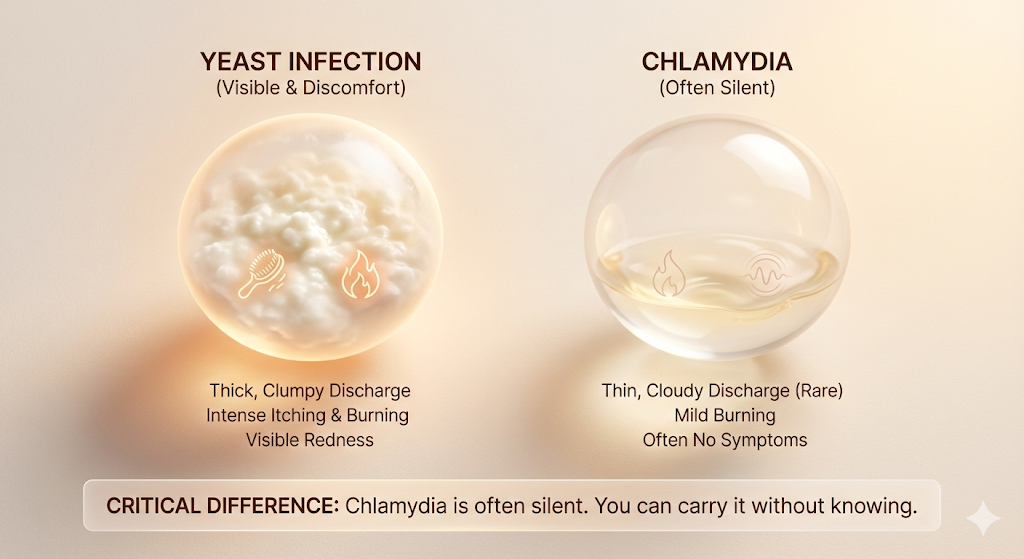
How Do Symptoms Compare?
This where things can get tricky, because there some overlap. But key differences in symptoms can help you tell them apart.
Yeast infection symptoms tend to include:
- Thick, white, clumpy discharge that looks like cottage cheese
- Intense itching and irritation of vulva and vaginal opening
- Redness and swelling around vulva
- Burning sensation, especially during urination or sex
- No strong odor (discharge usually odorless or mildly yeasty)
Chlamydia symptoms, when present, tend to include:
- Thin, yellowish, or cloudy discharge
- Mild burning during urination
- Bleeding between periods or after sex
- Lower abdominal or pelvic pain
- Pain during sex
Here is critical difference. Chlamydia is often silent. Up to 70% of women with chlamydia have no symptoms at all. That what makes it so dangerous. You can carry and spread chlamydia without knowing you have it. A yeast infection, by contrast, almost always makes itself known through itching and visible discharge.
If you want to understand what chlamydia discharge typically looks like and how it differs from normal discharge, this goes into more detail: What Color Is Chlamydia Discharge?
Can You Have Both at Same Time?
Yes, it is possible. Having yeast infection does not protect you from getting chlamydia, and having chlamydia does not prevent yeast infection. In fact, antibiotics used to treat chlamydia can sometimes trigger yeast infection by disrupting natural balance of vaginal bacteria.
If you are being treated for chlamydia and notice new symptoms like intense itching and thick white discharge after starting antibiotics, there good chance secondary yeast infection has developed. Your doctor can confirm this and prescribe an antifungal medication at same time.
How Is Each One Diagnosed?
A yeast infection is usually diagnosed with a pelvic exam and sample of vaginal discharge examined under microscope. Your doctor looks for presence of yeast cells. In many cases, if you have had yeast infections before and recognize symptoms, otc treatments may be an option.
Chlamydia requires a specific lab test. The most common test uses urine sample or swab from cervix or vagina. Its nucleic acid amplification test (NAAT), which detects genetic material of Chlamydia trachomatis bacterium. This test is highly accurate.
It is important to note that you cannot diagnose chlamydia based on symptoms alone, especially since most people with chlamydia have no symptoms. Routine screening recommended for sexually active women under 25 and for anyone with new or multiple sexual partners.
How Is Each One Treated?
Yeast infections are treated with antifungal medications. These come in several forms:
- Otc vaginal creams or suppositories (like miconazole or clotrimazole)
- A single oral dose of fluconazole (Diflucan) prescribed by your doctor
- For recurrent infections, your doctor may recommend longer course of treatment
If you are dealing with yeast infection and want to know your options for fast relief, this article covers what works and how quickly: How to Get Rid of Yeast Infection in 24 Hours
Chlamydia treated with antibiotics. The most commonly prescribed options are:
- Doxycycline (100 mg twice daily for 7 days), which now preferred first-line treatment
- Azithromycin (a single 1-gram dose), which used to be standard but now considered second line option
Both sexual partners need to be treated at same time to prevent reinfection. You should avoid sexual contact until both you and your partner have completed treatment and symptoms have resolved.
https://assets.getbeyondhealth.com/health-lib/blogs/manual_upload_20260223160934_yeast-infection-chlamydia.png]
What Happens If Either One Is Left Untreated?
An untreated yeast infection is uncomfortable, but its rarely dangerous for otherwise healthy people. It may get worse over time, and itching and discharge can become more intense. In rare cases, recurrent or untreated yeast infections can lead to skin breakdown or secondary bacterial infections of irritated tissue.
Untreated chlamydia is a much bigger concern. In women, infection can spread from cervix to uterus and fallopian tubes, causing pelvic inflammatory disease (PID). PID can lead to chronic pelvic pain, scarring of reproductive organs, ectopic pregnancy (a pregnancy that develops outside uterus), and infertility. In men, untreated chlamydia can cause epididymitis, an infection of tube that carries sperm, which can also affect fertility.
This is why screening matters, even when you feel perfectly fine. According to CDC, chlamydia is most frequently reported bacterial STI in United States, with millions of new cases each year.
When Should You See Doctor?
You should see doctor if:
- This is your first time experiencing these symptoms and you are not sure what you are dealing with.
- Your symptoms do not improve after using over-the-counter yeast infection treatment for few days.
- You have had new sexual partner or unprotected sex and want to rule out an STI.
- You notice unusual discharge that is yellow, green, or gray, or has strong odor.
- You experience pelvic pain, bleeding between periods, or pain during sex.
- You have recurrent yeast infections (four or more in year).
A simple exam and lab test can tell you exactly what you are dealing with and get you on right treatment quickly.
Bottom Line
A yeast infection and chlamydia may share few overlapping symptoms, but they are fundamentally different conditions. A yeast infection is fungal overgrowth caused by internal imbalances and is not sexually transmitted. Chlamydia is bacterial STI that often has no symptoms and can cause lasting damage if left untreated. If you are unsure which one you are dealing with, safest step is to get tested. A quick visit to your doctor can give you clear answer and right treatment plan.
Health Companion
trusted by
6Mpeople
Get clear medical guidance
on symptoms, medications, and lab reports.