
Health Library
Can Zepbound Cause Body Aches? What You Should Know
February 16, 2026
Question on this topic? Get an instant answer from August.
If you recently started Zepbound and your body feels sore or achy, you are not imagining things. Many people on this medication notice body aches, and it can feel confusing when you were not expecting it.
The good news is that these aches are usually not serious. They tend to happen because of indirect changes in your body, not because medication damaging your muscles. Let's walk through why this happens and what you can do.
Is It Normal to Feel Achy on Zepbound?
Yes, it can be a normal part of adjustment period. Body aches are not listed as a direct side effect in Zepbound's official prescribing information. Clinical trials focused mainly on digestive issues like nausea, diarrhea, and constipation.
However, real world experience tells a different story. Many people report feeling sore or generally achy after starting treatment. This usually shows up in the first few weeks or after a dose increase.
So while official data does not flag it as a primary side effect, your experience is still valid. Your body going through real changes, and those changes can show up as aches.
Why Does Zepbound Cause Body Aches?
The body aches you feel likely come from several indirect factors working together. Your body adjusting to a new medication, a new way of eating, and sometimes a new activity level all at once.
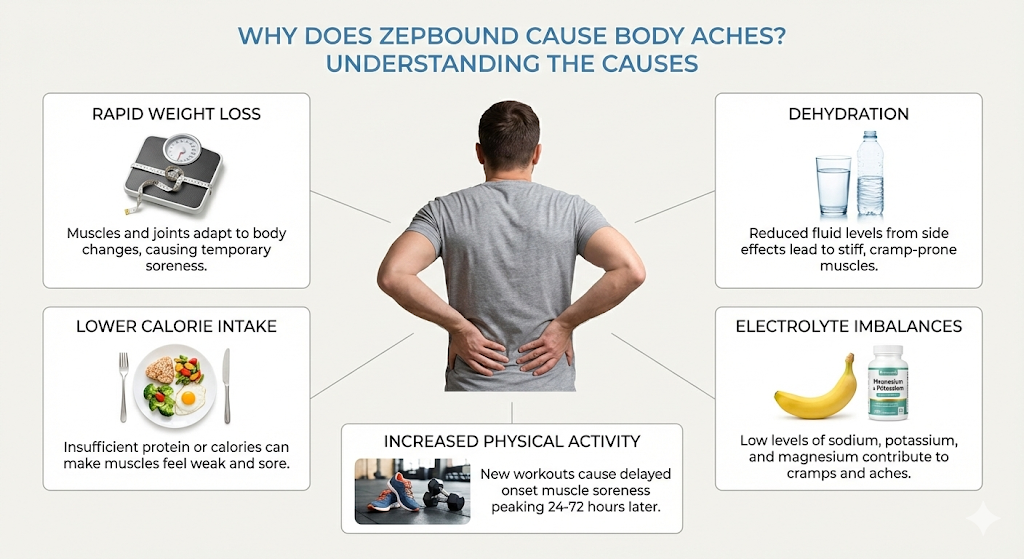
Here are most common reasons people experience aches on Zepbound:
- Rapid weight loss. When you lose weight quickly, your muscles and joints need time to adapt. This adjustment can cause temporary soreness.
- Dehydration. Zepbound can cause nausea, diarrhea, or vomiting, which reduce your fluid levels. Dehydrated muscles become stiff and prone to cramping.
- Lower calorie intake. Zepbound reduces your appetite significantly. If your body is not getting enough protein or calories, your muscles can feel weak and sore.
- Electrolyte imbalances. Eating less can mean less sodium, potassium, and magnesium. These minerals help muscles contract and relax. When they drop too low, cramps and aches happen more often.
- Increased physical activity. Many people start exercising more alongside their weight loss journey. New workouts can cause delayed onset muscle soreness that peaks 24 to 72 hours after exercise.
When you put all of these together, it makes sense that your body might feel achy. Its rarely one single cause. It is usually a combination of factors happening at the same time.
How Long Do the Body Aches Last?
For most people, body aches improve within four to eight weeks. That is roughly the time your body needs to settle into the medication and the lifestyle changes that come with it.
The aches tend to be worst during the first few weeks. They can also flare up after a dose increase. But as your body adjusts, the discomfort usually fades on its own.
If your aches stick around after two months, or get worse instead of better, check in with your doctor. Persistent pain could point to something unrelated that needs attention.
What Can You Do to Ease the Aches?
You do not have to just push through the discomfort. There are simple steps that can make a real difference.
- Stay well hydrated. Drink water throughout the day, especially if you have nausea or diarrhea. Proper hydration keeps muscles supple and less prone to cramping.
- Prioritize protein. Include a good protein source with each meal. Protein helps muscles recover and stay strong, even when you eat less overall.
- Replenish electrolytes. Talk to your doctor about an electrolyte supplement if you are eating much less. Balanced sodium, potassium, and magnesium levels can reduce cramps and stiffness.
- Ease into exercise. Build intensity gradually and include rest days. Low impact activities like walking or gentle stretching help without overdoing it.
- Use over the counter pain relief when needed. Acetaminophen or ibuprofen can help with mild aches. Check with your doctor before making it a regular habit.
- Track your symptoms. Keep a simple log of when aches happen and how severe they feel. This helps your doctor make better decisions about your treatment.
These steps address root causes of most Zepbound related body aches.
When Should You Be Concerned?
Most body aches on Zepbound are mild and temporary. But there are a few situations where you should reach out to your doctor sooner.
Here are some warning signs that need medical attention:
- Severe muscle pain that does not improve with rest
- Dark or tea colored urine, which could suggest rhabdomyolysis, a rare condition where muscle tissue breaks down rapidly
- Muscle weakness that interferes with everyday tasks
- Body aches paired with fever, chills, or unusual swelling
- Intense stomach pain with vomiting, which could signal pancreatitis or gallbladder problems
These situations are uncommon. Rhabdomyolysis in particular is rare, but it can affect your kidneys if left untreated. If your urine looks dark brown and you have severe muscle pain, get medical help right away.
Should You Stop Taking Zepbound Because of Body Aches?
In most cases, no. Mild to moderate body aches are not a reason to stop treatment. They are your body's way of adjusting, and they usually resolve with time and simple self care.
You should never change your medication without talking to your doctor first. If aches affect your quality of life, your doctor might adjust your dose or suggest a slower increase to give your body more time.
The important thing is to stay in communication with your healthcare provider. They can help you figure out whether what you feel a normal adjustment or something that needs a closer look.
You Are Not Alone in This
Starting a new medication can feel overwhelming, especially when unexpected symptoms show up. If Zepbound is giving you body aches, know that this is a common experience many people share. It does not mean medication not working or that something wrong.
With good hydration, proper nutrition, and patience, most people find aches settle down. Your doctor always there to help you navigate any bumps along way.
Health Companion
trusted by
6Mpeople
Get clear medical guidance
on symptoms, medications, and lab reports.